
Zuni Cafe menu, graded
The practical wait note that also reads as a countdown clock
Most restaurants hide their wait. Zuni's menu prints it next to the price for a practical reason, and the effect is that a known wait reads better than an unknown one.
Menu-craft grade
Prints the chicken's wait on the menu, a practical note that also doubles as an uncertainty-reducer, anchors on a famous signature, and drops the dollar sign. A late-meal surcharge and a wait that is stated but not explained keep it from an A.
Graded on how well the menu uses behavioral economics, not the food.
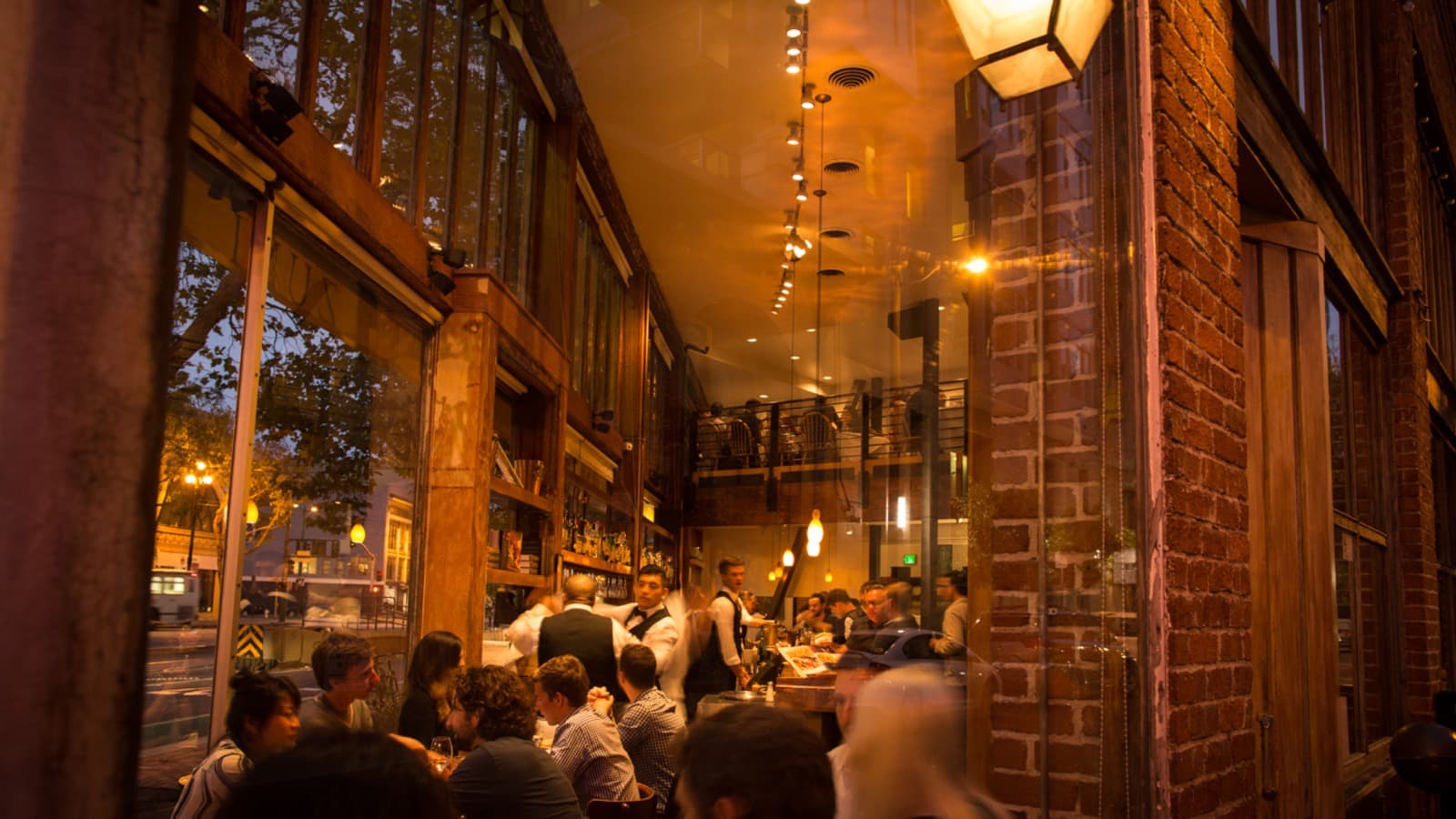
Menu and prices verified September 2026
A 3-minute audio read of the analysis
- Type
- Independent
- Where
- San Francisco, Market St
- Cuisine
- California / French / Italian
- Footprint
- 1 location
- Since
- 1979
- Ownership
- Independent, opened by Billy West (1979); James Beard Outstanding Restaurant (2003)
The mechanics, drawn
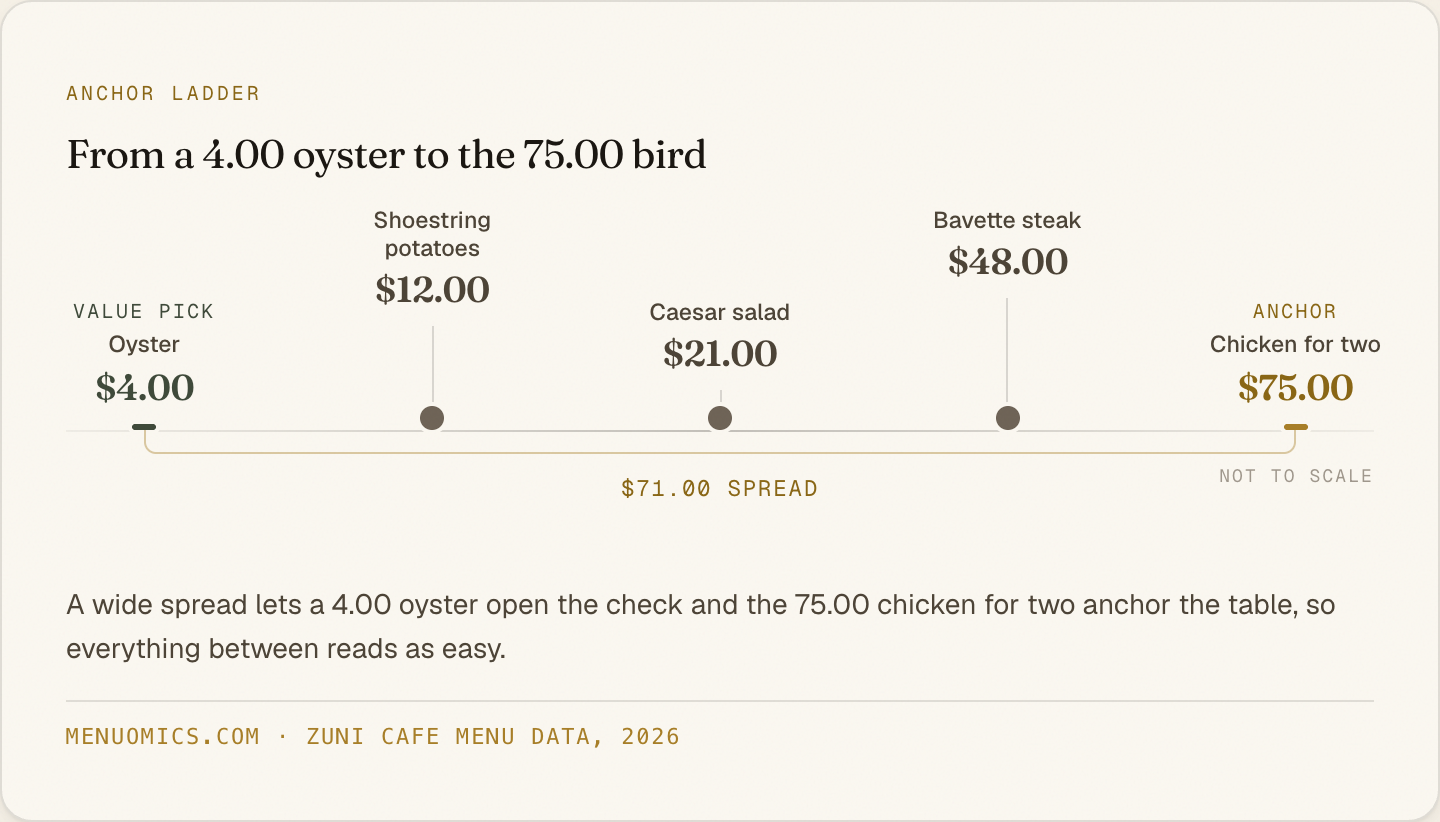
The same menu, mapped onto an axis, so the behavioral move is something you can see, not just read.
From a 4.00 oyster to the 75.00 bird
A wide spread lets a 4.00 oyster open the check and the 75.00 chicken for two anchor the table, so everything between reads as easy.
Download this chart (PNG) · free to reuse with credit, see reuse terms.
The setup
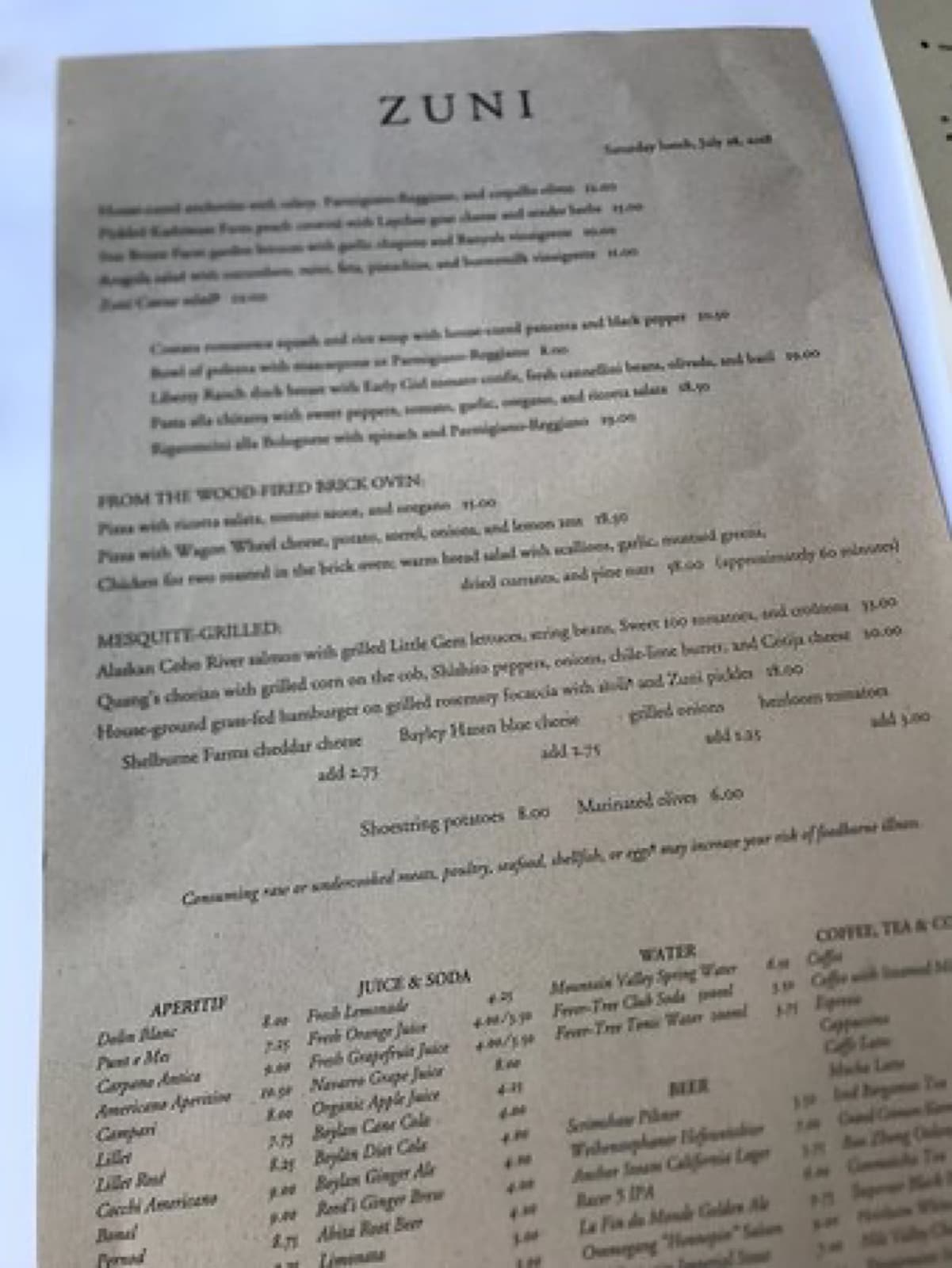
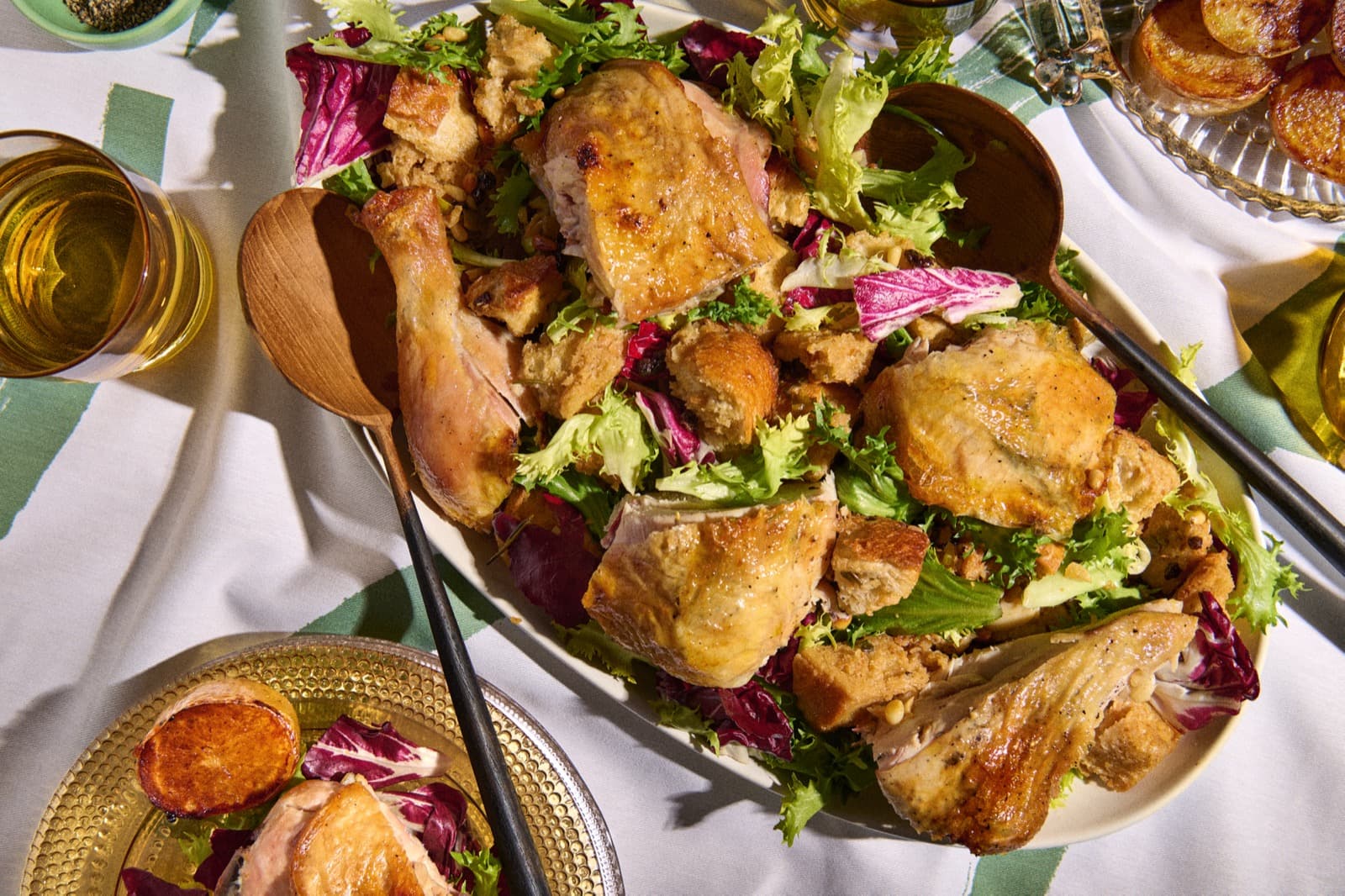
Zuni Cafe's signature is a wood-fired roast chicken for two with bread salad. It costs 75.00, and the menu tells you, in plain type, that it takes "approximately 75 minutes." In practice that note is an operational warning: the bird is roasted whole to order, takes roughly 60 to 75 minutes, and cannot be ordered ahead.
Rory Sutherland has a rule about waiting: people don't hate waiting, they hate uncertain waiting. A train countdown clock makes seven known minutes feel better than four unknown ones. Whatever Zuni's intent, the printed time has the same effect: it converts an open-ended wait into a known one.
What they get right
The behavioral economics already at work.
Printing the wait reduces the uncertainty
The note exists for a practical reason: the chicken is roasted to order and takes about 75 minutes. But stating the time has a second effect: it converts an anxious, open-ended wait into a known, chosen one, and it lets the wait read as evidence of craft, made to order and wood-fired. The wording can be tuned to lean into that effect without overclaiming.
Sutherland on the countdown clock and the airport-bus reframe
"For two" is a shared ritual and an anchor
Listing the hero dish only as "for two" makes it a social ritual, solves the table's veto, and quietly raises the check; observed as a 75.00 decision the table makes together.
Sutherland on shared ordering; anchoring
Let the famous one be the default
By the cookbook's account the Caesar outsells everything roughly three to one. A famous signature gives satisficers a confident default and removes choice anxiety on a daily-changing menu.
Judy Rodgers, The Zuni Cafe Cookbook: the Caesar outsold every dish by a factor of three
No dollar signs, provenance everywhere
"21.00" with no "$," and sourcing baked into the copy, "Stemple Creek Ranch grass-fed," "Riverdog Farm egg." The money cue is muted and the origin cues are associated with higher perceived quality and willingness to pay.
provenance naming is associated with higher WTP, Cornell money-cue study; country-of-origin WTP literature
What we’d test
The rewrite, with the expected lift and the honest caveat.
Merchandise the wait in one line of copy
The wait is already printed; the menu-copy next step is a single clause of why, "roasted to order in the brick oven, about 75 minutes." Stating the reason on the line, not just the duration, lets more diners opt in knowingly.
Expect Fewer "not worth the wait" defections
Caveat Menu wording only; one clause, since Zuni's menu earns its authority through restraint.
Present the surcharge in the menu's own voice
The 20% gratuity plus 5% surcharge is a recurring end-of-meal complaint, a textbook case of partitioned pricing reversing when the add-on feels large. This is a presentation change, not a pricing one: state it warmly in the footer's voice, "a 20% Fair Wage gratuity and a 5% surcharge, so our team is paid fairly; nothing more is expected," so the line reads as a value rather than a penalty.
Caveat Presentation of the existing charge only; this does not change what is charged.
Morwitz et al. 1998; Prelec & Loewenstein on integrated vs itemized cost
Make the Caesar's dominance work harder on the page
A 3-to-1 best-seller is a menu asset: a quiet "most ordered" cue on the Caesar's line plus a printed natural pairing can turn the default into a slightly larger check, all through wording and placement.
Caveat Menu copy only; nudge, don't shout, and don't over-engineer an institution.
What diners actually say
Synthesized from public reviews, the reality check that grounds every recommendation.
They praise
- The roast chicken (once you embrace it)
- The shoestring potatoes
- An iconic, light-filled room
- Professional, theater-aware service
They criticize
- "Not worth the 75-minute wait / 75.00"
- Tables packed tightly
- The 20% + 5% surcharge
The verdict
Zuni's menu does something rare: it states a downside in plain type, and the effect is that a known wait reads better than a hidden one. The printed time is a practical warning that also works like Sutherland's countdown clock. The unfinished menu work is wording that gives the wait its reason for the skeptics, and presenting a surcharge that quietly undoes some of the goodwill the rest of the menu earns.
Common questions
- Why does Zuni Cafe's chicken take 75 minutes?
- The roast chicken for two is 75.00 and is roasted whole to order, so it takes about 60 to 75 minutes and cannot be ordered ahead. The menu prints '(approximately 75 minutes)' next to the price, which converts an open-ended wait into a known one that reads as evidence of craft.
- Is the Zuni Cafe roast chicken worth it?
- At 75.00 for two the chicken is the menu's anchor and helps earn an A- grade, though the wait is the most common complaint. Listing it only 'for two' makes it a shared ritual that solves the table's veto and quietly raises the check the table agrees to together.
- How much is the Caesar salad at Zuni Cafe?
- The Zuni Caesar salad is 21.00, and by the cookbook's account it outsells every other dish roughly three to one. A famous signature like this gives undecided diners a confident default and removes choice anxiety on a daily-changing menu.
- Why does Zuni Cafe print prices without dollar signs?
- Prices show as round whole dollars to two decimals with no '$,' like '21.00,' never '21.95.' Muting the money cue softens the pain of paying, while provenance cues baked into the copy, such as 'Stemple Creek Ranch grass-fed,' lift perceived quality.
Sources (6)
- Zuni Café, menus
- Resy, "Long Live Zuni Café"
- James Beard Foundation award database (Zuni Café, Outstanding Restaurant 2003; Judy Rodgers, Outstanding Chef 2004)
- Rory Sutherland, “Perspective is everything” (the countdown clock)
- Cornell, removing the “$” lifted spend ≈8%/person (Yang, Kimes & Sessarego, 2009)
- Partitioned pricing, Morwitz, Greenleaf & Johnson, 1998
More breakdowns
A 1988 supper club hidden down a Gold Street alley, where live jazz, $18 martinis and tableside theater are the product and the food only has to clear the bar the room has raised.
Read the Bix breakdown →An elegant, romantic neighborhood bistro in Lower Pacific Heights serving modern French cooking with a Californian accent, from chef JP Carmona and the B Patisserie team.
Read the Routier breakdown →The James Beard 'America's Classic' that builds its whole reputation on what it leaves out: no rice, six meats, one price, off-menu dorado.
Read the La Taqueria breakdown →A Tenderloin Creole institution where one cheap, famous beignet gets bundled into a four-way Flight that quietly triples the check.
Read the Brenda's French Soul Food breakdown → NopaA
NopaAA 2006 Divisadero gathering place whose daily wood-fired menu prints prices as plain numbers, no dollar signs, no cents, anchored by a 49 brisket.
Read the Nopa breakdown → Marufuku RamenA-
A four-bowl Hakata tonkotsu menu that lets you tune firmness, spice, and richness without ever asking you to design the bowl. Constrained customization, done well.
Read the Marufuku Ramen breakdown →Your menu next
Get this for your own menu, free.
Send your menu and we’ll send back the same breakdown, what you get right, what we’d test, and why.
Pearl 6101
A neighborhood Outer Richmond Cal-Mediterranean restaurant from the Pizzetta 211 team, whose menu prints prices as bare round numbers with no dollar signs and no cents.
Read it →