Judahlicious menu, graded
A raw-vegan menu leans on ingredient detail; the pricing presentation should match that care.
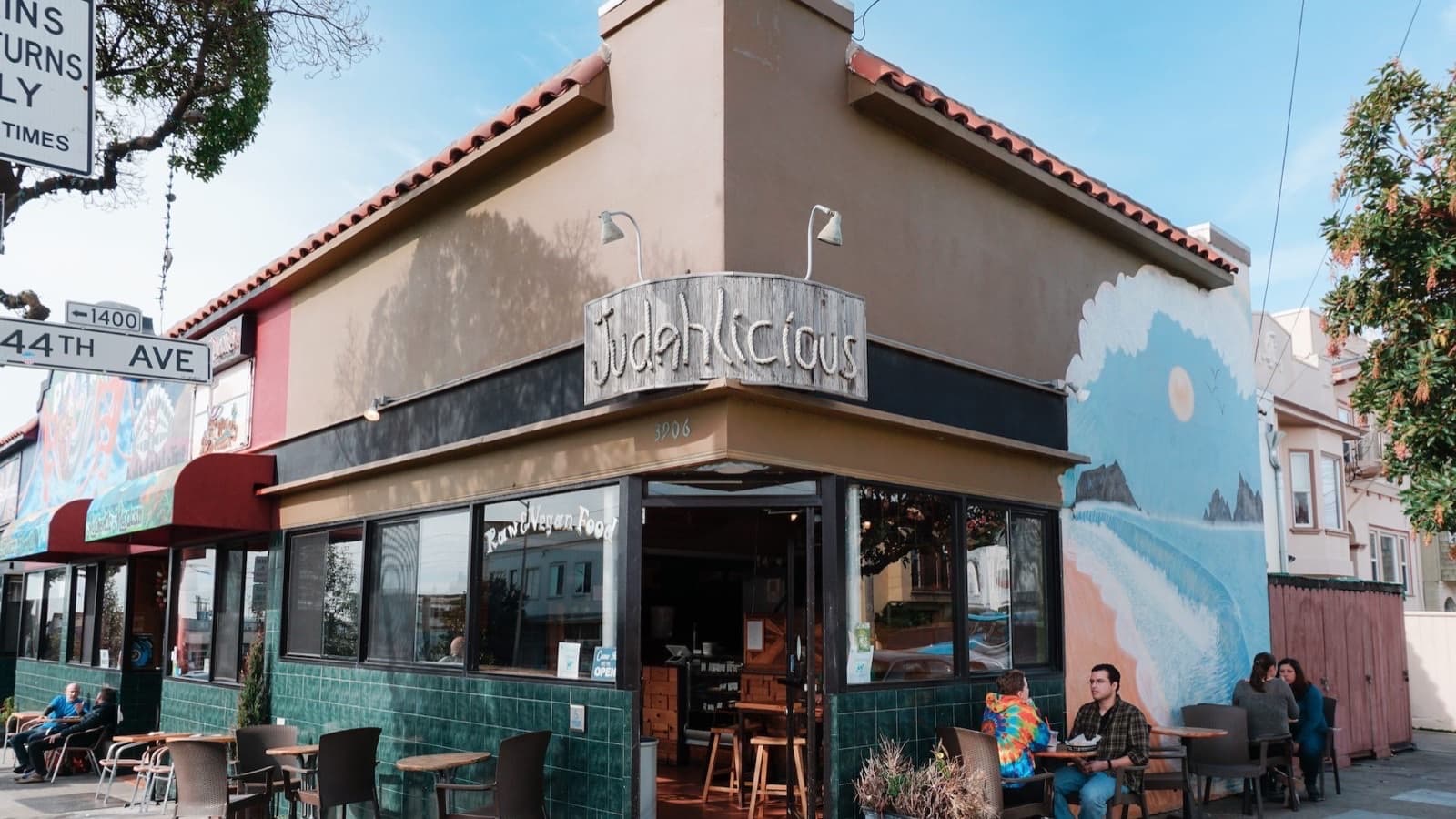
Judahlicious sells acai bowls, smoothies and raw-vegan plates from chef-owner Ping Ren. The menu leans on detailed ingredient lists (maca, cordyceps, chlorella, 'no added sugars', organic, local), which is typical for a raw-vegan menu where dietary content matters to the buyer.
Menu-craft grade
A detailed superfood ingredient list and a real zero-waste story sit alongside $13 bowls, but inconsistent pricing presentation and a cross-page price conflict ($13 on the main menu, $12.75 on the acai sub-page) undercut the careful, premium read the rest of the menu earns.
Graded on how well the menu uses behavioral economics, not the food.
Menu and prices verified September 2026
A 3-minute audio read of the analysis
- Type
- Independent
- Where
- San Francisco, Outer Sunset
- Cuisine
- Raw, vegan and juice bar
- Footprint
- 1 location
- Since
- 2004
- Ownership
- Independent, chef-owned (Ping Ren)
The mechanics, drawn
The same menu, mapped onto an axis, so the behavioral move is something you can see, not just read.
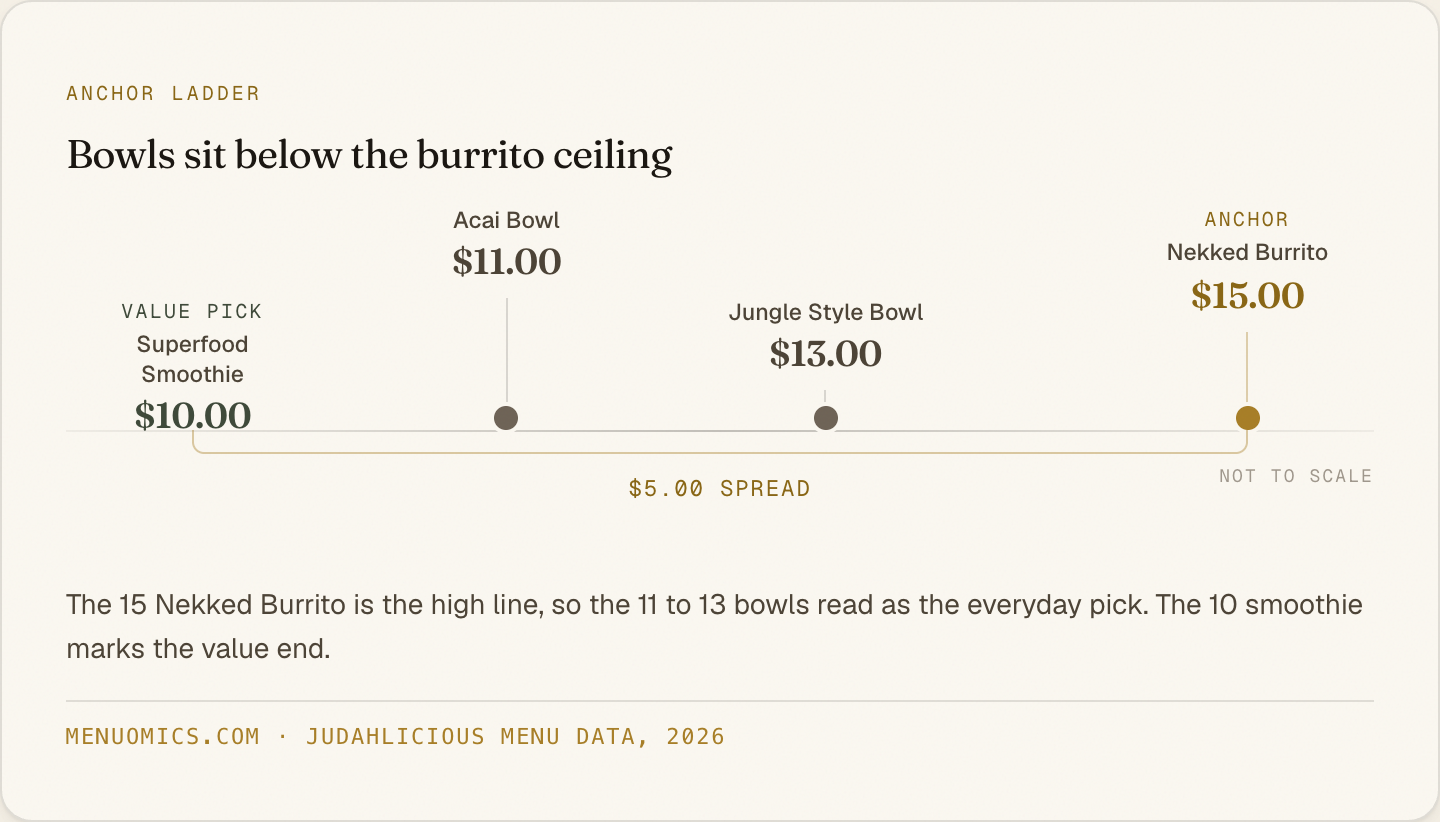
Bowls sit below the burrito ceiling
The 15 Nekked Burrito is the high line, so the 11 to 13 bowls read as the everyday pick. The 10 smoothie marks the value end.
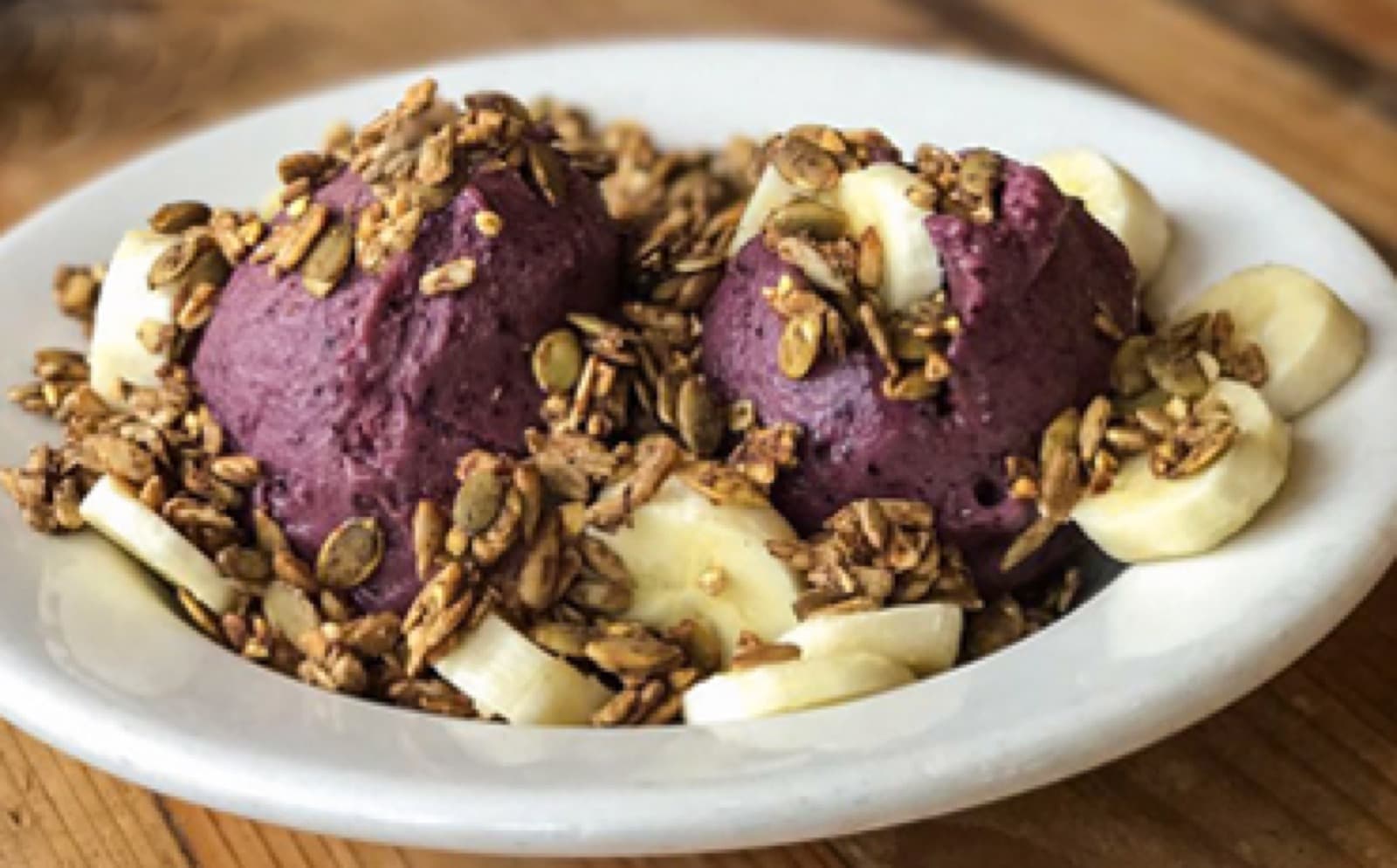
Build your own acai bowl
A cheap base bowl plus a topping ladder lets the diner build the price up. The first topping costs more than each one after.
Download this chart (PNG) · free to reuse with credit, see reuse terms.
The setup
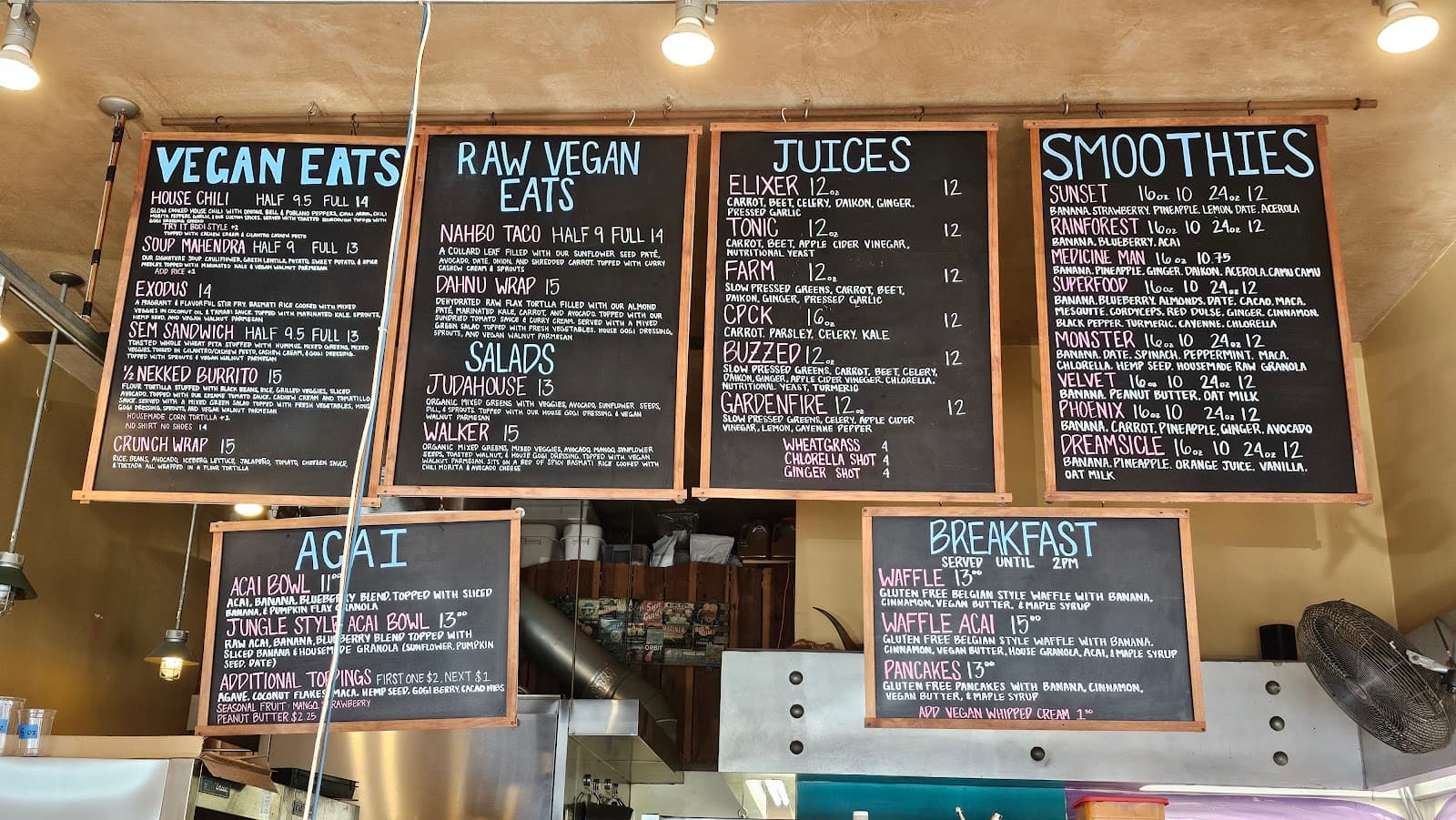
Judahlicious has fed the Outer Sunset since 2004, a block from Ocean Beach, with raw-vegan plates, acai bowls and made-to-order juices from chef-owner Ping Ren, a certified raw-vegan chef. Read the menu and the ingredient detail is consistent: a smoothie is not listed as 'banana and blueberry', it is 'Banana, Blueberry, Goji Berry, Almonds, Date, Cacao, Maca, Mesquite, Cordyceps, Red Dulse, Ginger, Cinnamon, Turmeric'.
That level of detail is standard for a raw-vegan menu, where buyers care about exactly what is in the food. Independent reviews describe the bowls as generously portioned and made in-house, and attribute the higher price to portion size and quality rather than to the naming. The menu also carries a genuine zero-waste, green-business story, with compostable packaging and local, organic sourcing.
What they get right
The behavioral economics already at work.
The ingredient list does double duty
Listing the cordyceps, the maca and the chlorella tells a raw-vegan buyer exactly what they are getting, which is information this audience actively wants, and descriptive labels also tend to raise perceived value over a generic 'fruit smoothie'.
descriptive labels +27% sales, Wansink, Painter & van Ittersum, 2001
Visible green commitments read as quality
Raw, organic, local, 'no added sugars', compostable packaging, an early San Francisco Green Business. Each is a visible, hard-to-fake commitment that signals quality, consistent with how reviewers describe the food.
Rory Sutherland on costly signalling
Whimsical names build identity
Nekked Burrito, Soup Mahendra, Nahbo Taco. The names are memorable, on-brand for the surf-neighborhood vibe, and turn a vegan menu into a small world worth telling friends about.
Toppings are a partitioned add-on ladder
'$2 for the first, $1 for each additional' keeps the base bowl cheap and lets enthusiasts build the price up themselves, a gentle upsell that never feels imposed.
Morwitz, Greenleaf & Johnson, 1998
What we’d test
The rewrite, with the expected lift and the honest caveat.
Close the acai expectation gap in the wording
The plain Acai Bowl description leads with granola; the recurring 'too much granola, not enough acai' note suggests the wording sets an acai-forward expectation the listing could manage better. Leading the description with the acai and the 'No Added Sugars' framing, and naming the granola second, aligns the menu copy with what arrives.
Expect Fewer wording-driven value complaints
Caveat A menu-copy change only, not a portioning or kitchen change.
Normalize the price formatting and resolve the cross-page conflict
Prices jump between '$11.00', '$13' and '$9.50', and the same two bowls show different numbers on the main menu versus the acai sub-page ($13/$11 vs $12.75/$10.50). One convention and one source of truth would read as careful as the ingredient lists do.
Expect A more confident, consistent read of the whole menu
Caveat A presentation and data-consistency fix; the underlying prices are the owner's call.
Name the most-ordered for newcomers
Tourists and first-time beachgoers are a large share of traffic and the most unsure. A 'most ordered' cue on the Jungle Style or the Nekked Burrito steers them and speeds the decision.
Expect Faster ordering for first-timers
Caveat One or two cues only; the menu is already dense, and the tag should reflect real order data.
What diners actually say
Synthesized from public reviews, the reality check that grounds every recommendation.
They praise
- Fresh, genuinely healthy whole foods
- The signature bowls and the Nekked Burrito
- The beach-neighborhood vibe and patio
- Friendly, accommodating staff
They criticize
- Slow service at peak
- Acai bowls: too much granola, too little acai
- Order accuracy and consistency slip
The verdict
Judahlicious is a careful raw-vegan menu: detailed ingredient lists tell buyers exactly what they are getting, and a real zero-waste story backs it up, with reviewers crediting the premium to generous portions and in-house quality. The fixable gap is in presentation, where inconsistent price formatting and a cross-page price conflict read as less careful than the food itself.
Common questions
- How much is an acai bowl at Judahlicious in San Francisco?
- The signature Jungle Style Acai Bowl is $13 and the entry Acai Bowl is $11 on the main menu, though both show lower prices ($12.75 and $10.50) on the acai sub-page. That cross-page price conflict undercuts the careful, premium read the detailed superfood ingredient lists otherwise earn.
- Why do Judahlicious acai bowls list so many ingredients?
- A Judahlicious smoothie lists its full superfood roster (maca, cordyceps, chlorella and more) rather than just banana and blueberry. That detail is standard for a raw-vegan menu where buyers care what is in the food, and descriptive labels also raise perceived value, by about 27 percent in Wansink's study.
- How do acai bowl toppings work at Judahlicious?
- Toppings are a build-your-own ladder: $2 for the first topping and $1 for each additional one like bee pollen or cacao nibs. Keeping the base bowl cheap and letting enthusiasts build the price up is a gentle upsell that never feels imposed.
- What is the Nekked Burrito at Judahlicious?
- The Nekked Burrito is the menu's high line at $15, served as a half with salad. As the ceiling above the $11 to $13 bowls, it makes the bowls read as the everyday pick, and its whimsical name fits the surf-neighborhood vibe.
More breakdowns
 Pearl 6101B+
A neighborhood Outer Richmond Cal-Mediterranean restaurant from the Pizzetta 211 team, whose menu prints prices as bare round numbers with no dollar signs and no cents.
Read the Pearl 6101 breakdown →A family-run St. Helena restaurant from chef Elliot Bell, who spent a decade at The French Laundry, serving hearth-cooked New American food with an unusual-for-wine-country seafood streak.
Read the Charlie's breakdown →A farm-to-table restaurant in a restored St. Helena barn on Highway 29, where Long Meadow Ranch grows and raises much of what lands on the plate, from grass-fed beef to estate olive oil.
Read the Farmstead breakdown →The North Beach pizza spinoff of the acclaimed Flour + Water pasta flagship, where a ten-pie menu at $18 to $23, a glass dough room, and a curated natural-wine list sell craft and pedigree at a premium.
Read the Flour + Water Pizzeria breakdown → Restaurant Gary DankoA
Tiered courses, round whole-dollar prices, a caviar anchor, build-your-own freedom and a tableside cheese cart. Danko is already doing what we'd recommend.
Read the Restaurant Gary Danko breakdown → Zuni CafeA-
A 75.00 chicken that takes about 75 minutes, and the menu says so. A practical warning that also happens to reduce uncertainty, printed in the margin.
Read the Zuni Cafe breakdown →Your menu next
Get this for your own menu, free.
Send your menu and we’ll send back the same breakdown, what you get right, what we’d test, and why.
Palmetto Superfoods
A California acai chain whose menu leads with the one promise every acai shop gets accused of breaking: '100% Real Acai, every time.'
Read it →