Palmetto Superfoods menu, graded
Answer the category's biggest objection right on the menu.
Every acai bowl shop hears the same complaint: 'that's not real acai, it's just ice cream.' Palmetto built its whole pitch around pre-empting that objection. The question is whether the bowl backs it up.
Menu-craft grade
A smart build-your-own model and a '100% Real Acai' claim that pre-empts the category's biggest objection, but the same 'this is just ice cream' complaints still surface in reviews, which puts the menu's boldest promise under pressure.
Graded on how well the menu uses behavioral economics, not the food.
Menu and prices verified September 2026
A 3-minute audio read of the analysis
- Type
- Chain
- Where
- California-based, founded in San Francisco in 2019, now expanding (SoCal and Austin TX)
- Cuisine
- Acai bowls and smoothies
- Footprint
- 18 locations
- Since
- 2019
- Ownership
- Independently owned; founded by Charles Lee (CEO) and Hessam Shirmohammadi (COO) with sisters Thais and Amanda Moreira of Cafe de Casa
The mechanics, drawn
The same menu, mapped onto an axis, so the behavioral move is something you can see, not just read.
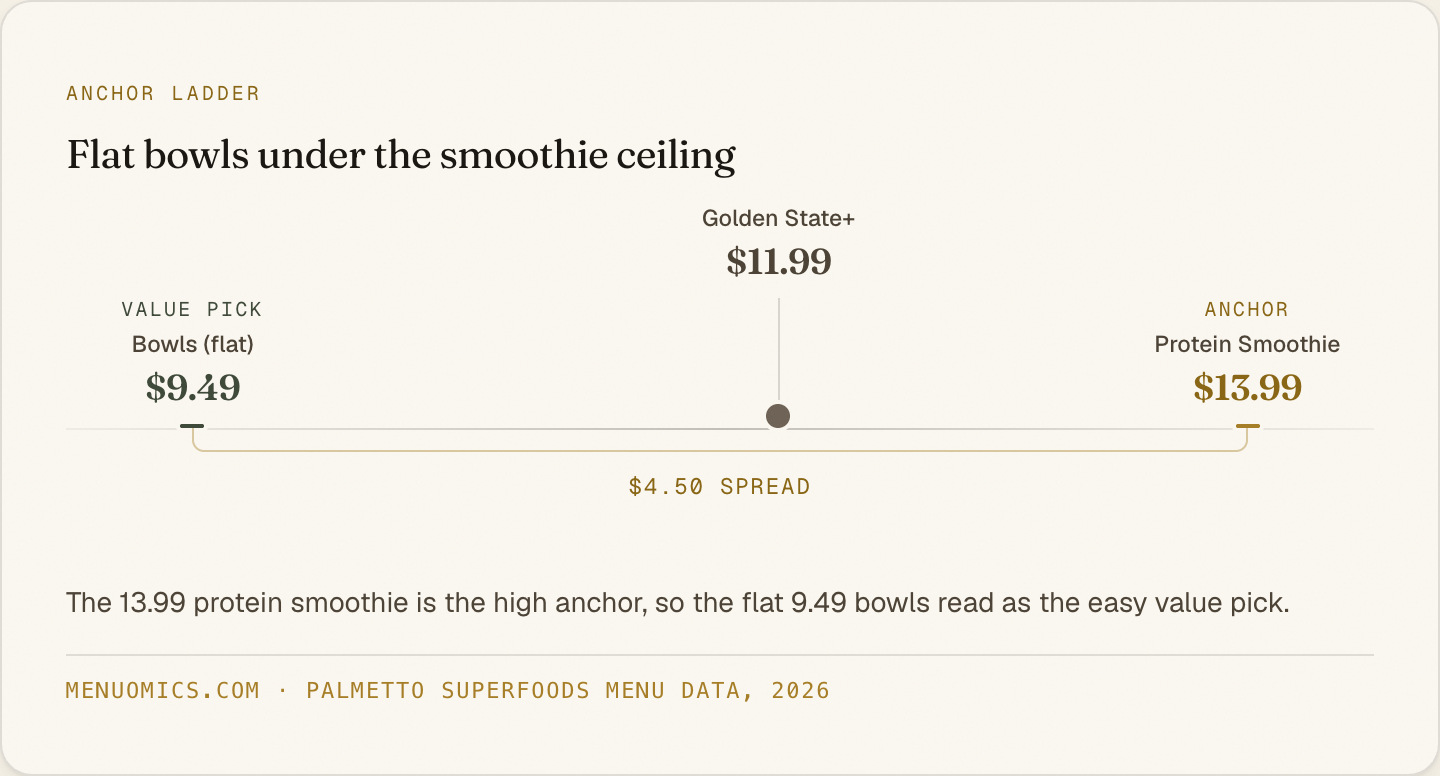
Flat bowls under the smoothie ceiling
The 13.99 protein smoothie is the high anchor, so the flat 9.49 bowls read as the easy value pick.
Download this chart (PNG) · free to reuse with credit, see reuse terms.
The setup
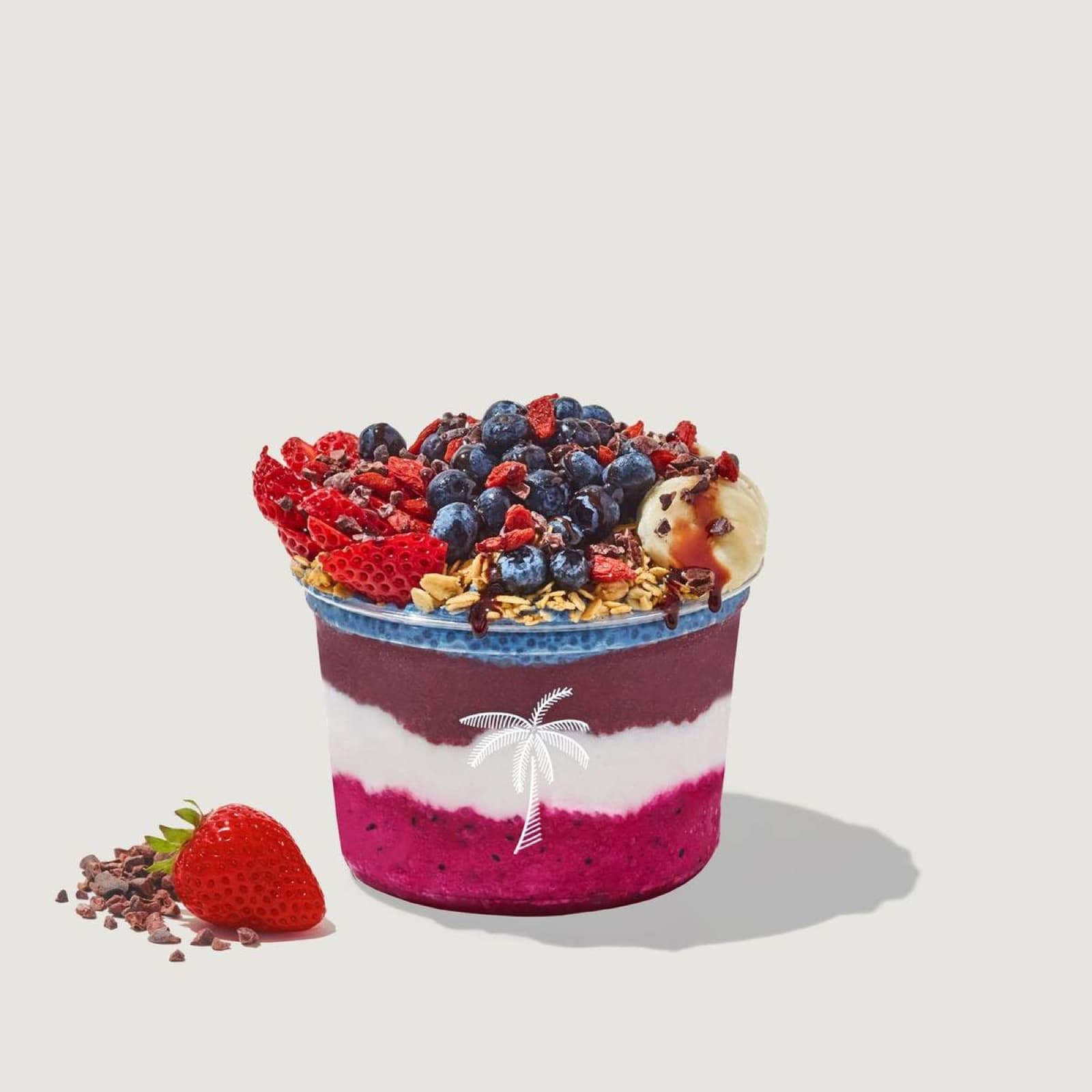
Palmetto Superfoods sells acai bowls at a flat $9.49 and superfood smoothies across 18 California-based locations, founded in San Francisco in 2019 and now expanding into SoCal and Austin TX. Its homepage does not lead with flavor or price. It leads with a defense: '100% Real Acai, every time,' 'straight from the source, no 3rd party,' 'no sugars and additives.'
That is a deliberate behavioral move. The acai category's single most common criticism, visible right in Palmetto's own reviews, is 'this isn't real acai, it's ice cream.' Naming and refuting the objection before the customer can raise it is textbook. It only works if the product clears the bar the claim sets.
What they get right
The behavioral economics already at work.
The menu pre-empts the category's #1 objection
Every acai shop gets 'that's not real acai, it's ice cream.' Palmetto leads with '100% Real Acai, every time, straight from the source.' Naming and answering the doubt before it is raised is a strong trust move, and a direct counter to the complaint that sinks competitors.
the reassurance / pratfall logic: address the doubt to make the claim believable
Build-your-own creates ownership
Putting build-your-own at the top, with full base and topping lists, lets customers co-create the bowl. People value what they help make, which builds loyalty and helps justify the price.
the endowment effect / the 'IKEA effect'
Flat bowl pricing removes friction
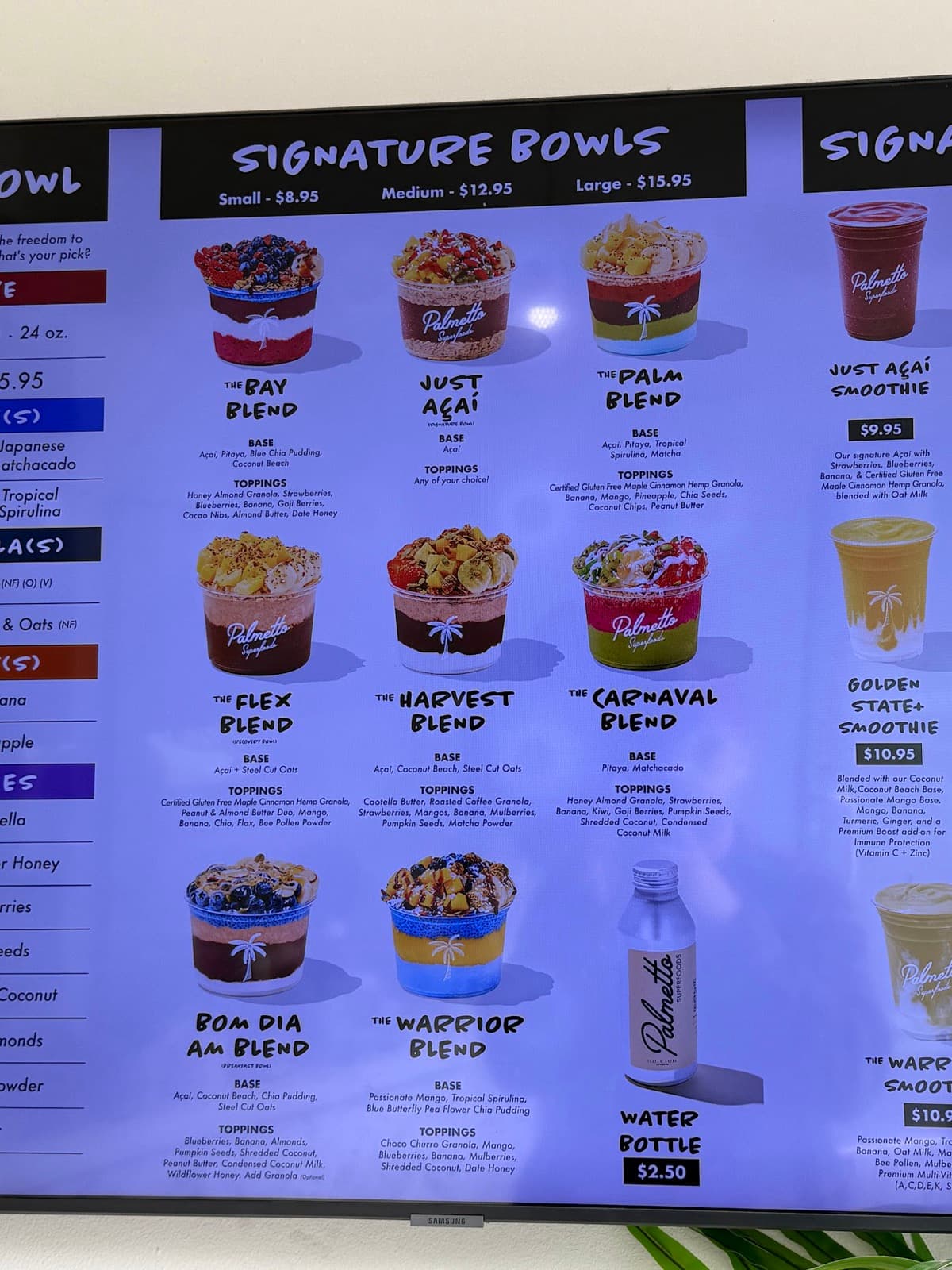
Every bowl is $9.49, signature or build-your-own. One price kills the math and the comparison, so the decision is about the bowl, not the cost.
Smoothies sell the benefit, not the drink
Each smoothie carries a bulleted 'Benefits:' block (immune boost, anti-inflammatory, muscle recovery) and named premium boosts (collagen, grass-fed whey, reishi). The health claim is the product, and it carries the smoothie to $13.99.
benefit and provenance framing raise willingness to pay, descriptive-naming literature
What we’d test
The rewrite, with the expected lift and the honest caveat.
Print the authenticity claim as a menu header
The '100% Real Acai' promise lives mostly on the homepage. Put it in the menu copy itself, as a one-line header or badge above the bowls: '100% real acai, no added sugar, juice, water, or dairy.' Let the objection-answering claim sit where the buying decision happens, not just on the site.
Expect The authenticity claim reaches every in-store buyer, not just web visitors
Caveat Menu-copy placement only; does not change the product.
Set the made-to-order expectation on the menu
Add a printed 'made fresh to order' line to the menu. A short, on-menu expectation line frames the bowl as built-to-order rather than grab-and-go, which sets the customer's frame before they order.
Expect Clearer expectations set at the point of decision
Caveat Menu wording only; not an operations or pacing change.
Show the most-liked to newcomers
Palmetto already tracks '#1 most liked' (Harvest Blend) in its app. Surface it at the top of the Signature Bowls section, tagged 'Most Loved,' to steer the overwhelmed first-timer.
Expect More first-timers default to a proven bowl
Caveat Ordering and tagging only; already tracked in-app, just bring it forward.
What diners actually say
Synthesized from public reviews, the reality check that grounds every recommendation.
They praise
- The acai and bowl quality
- Generous, high-quality superfood toppings
- Build-your-own customization
- Friendly staff and easy order-ahead
They criticize
- 20 to 35 minute waits, chaotic on weekends
- Order errors and missing toppings
- 'Not real acai / just ice cream' on off days
The verdict
Palmetto Superfoods makes a confident behavioral bet: lead with the exact objection the acai category cannot shake, '100% Real Acai', and let build-your-own and benefit-framing do the rest. It is a smart, scalable menu. The catch is that a brand built on answering 'is it real?' lives or dies on what the bowl delivers, so the menu's job is to put that claim where every buyer sees it.
Common questions
- How much is an acai bowl at Palmetto Superfoods?
- Every bowl, signature or build-your-own, is a flat $9.49, while smoothies run $10.99 to $13.99. One flat price kills the math and the comparison, so the decision is about the bowl, not the cost.
- Is Palmetto Superfoods acai real?
- Palmetto leads its whole pitch with '100% Real Acai, every time, straight from the source, no 3rd party,' which is a deliberate move to refute the category's most common complaint before a customer raises it. Naming and answering the doubt builds trust, but it only works if the bowl clears the bar the claim sets.
- What is the most expensive item on the Palmetto menu?
- The Chocolate Acai Protein Smoothie is the ceiling at $13.99, built on grass-fed whey with 28g protein. As the high anchor it makes the flat $9.49 bowls read as the easy value pick.
- What is the most popular bowl at Palmetto Superfoods?
- The Harvest Blend, at the flat $9.49, is the #1 most-liked bowl, blending acai, coconut and cinnamon steel cut oats with coffee granola and strawberries. Surfacing that social-proof cue steers overwhelmed first-timers toward a proven choice.
More breakdowns
 Olive GardenB+
Never-ending breadsticks read less like generosity than like decoupled pricing: a loss-leader and a recurring scarcity event working in concert.
Read the Olive Garden breakdown → SweetgreenB+
The salad chain that names every bowl for its ingredients and farmers, then offers a handful of signature defaults so you don't have to build from scratch.
Read the Sweetgreen breakdown → Chipotle Mexican GrillA-
Chipotle's menu is a build-your-own assembly line with no prices on the rail, so you customize first and total up last, with guac quoted as a tidy little add-on.
Read the Chipotle Mexican Grill breakdown → StarbucksA-
Tall is the small. The names hide the ounces, the app hides the payment, and a pumpkin drink restarts the whole calendar every August. The most studied size menu in the world.
Read the Starbucks breakdown → CAVAB+
CAVA's menu is a build-your-own Mediterranean line that includes three scratch dips and unlimited toppings free, then concentrates the upsell on one flat premium-protein step and resells the dips as paid sides.
Read the CAVA breakdown → Shake ShackB+
A burger near $7.19 in a category where rivals sell at a dollar. Shake Shack does not discount; it sells provenance, refuses a value menu, and lets the sourcing copy justify every cent.
Read the Shake Shack breakdown →Your menu next
Get this for your own menu, free.
Send your menu and we’ll send back the same breakdown, what you get right, what we’d test, and why.
Saint Frank Coffee
An SF specialty roaster that prices a latte at a fine-coffee premium and justifies it with a story: named farms, tasting notes, and a 'relationship coffee' ethos that turns a cup into a cause.
Read it →