The Cheesecake Factory menu, graded
Choice overload, and why it doesn't apply here
The textbook says a 250-item menu kills sales. The Cheesecake Factory says the textbook is missing something.
Menu-craft grade
Masterful veto-proofing, descriptive copy and a built-in social-proof tag, all undercut by dollar signs, charm pricing and no fast lane through 250 items.
Graded on how well the menu uses behavioral economics, not the food.
Menu and prices verified September 2026
A 3-minute audio read of the analysis
- Type
- Chain
- Where
- Calabasas, CA
- Cuisine
- Upscale-casual American
- Footprint
- ~218 Cheesecake Factory-branded locations
- Since
- 1978
- Ownership
- NASDAQ: CAKE, ~$4B revenue (fiscal 2026 guidance)
The mechanics, drawn
The same menu, mapped onto an axis, so the behavioral move is something you can see, not just read.
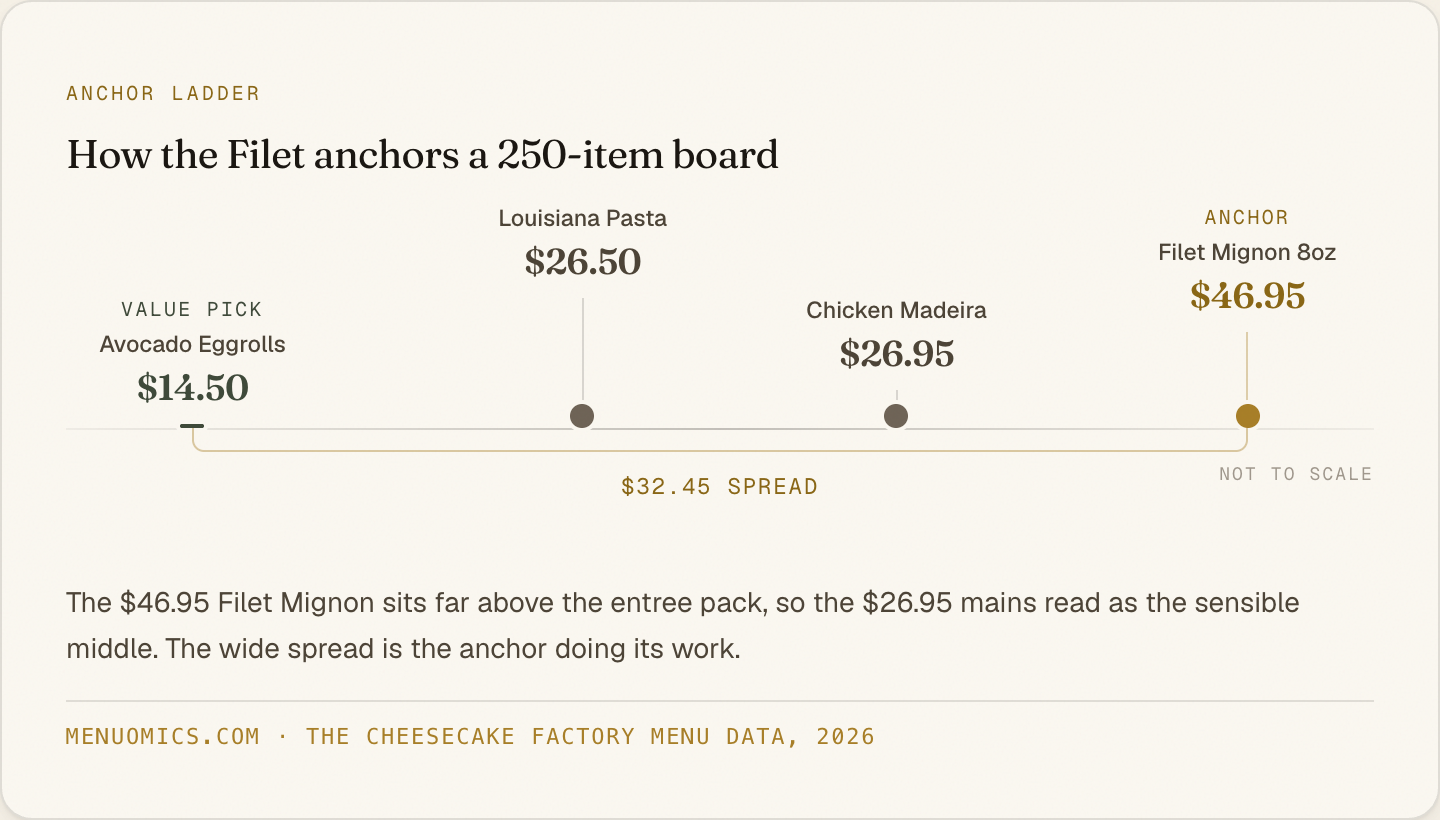
How the Filet anchors a 250-item board
The $46.95 Filet Mignon sits far above the entree pack, so the $26.95 mains read as the sensible middle. The wide spread is the anchor doing its work.
Download this chart (PNG) · free to reuse with credit, see reuse terms.
The full ticket
What it actually rings up to.
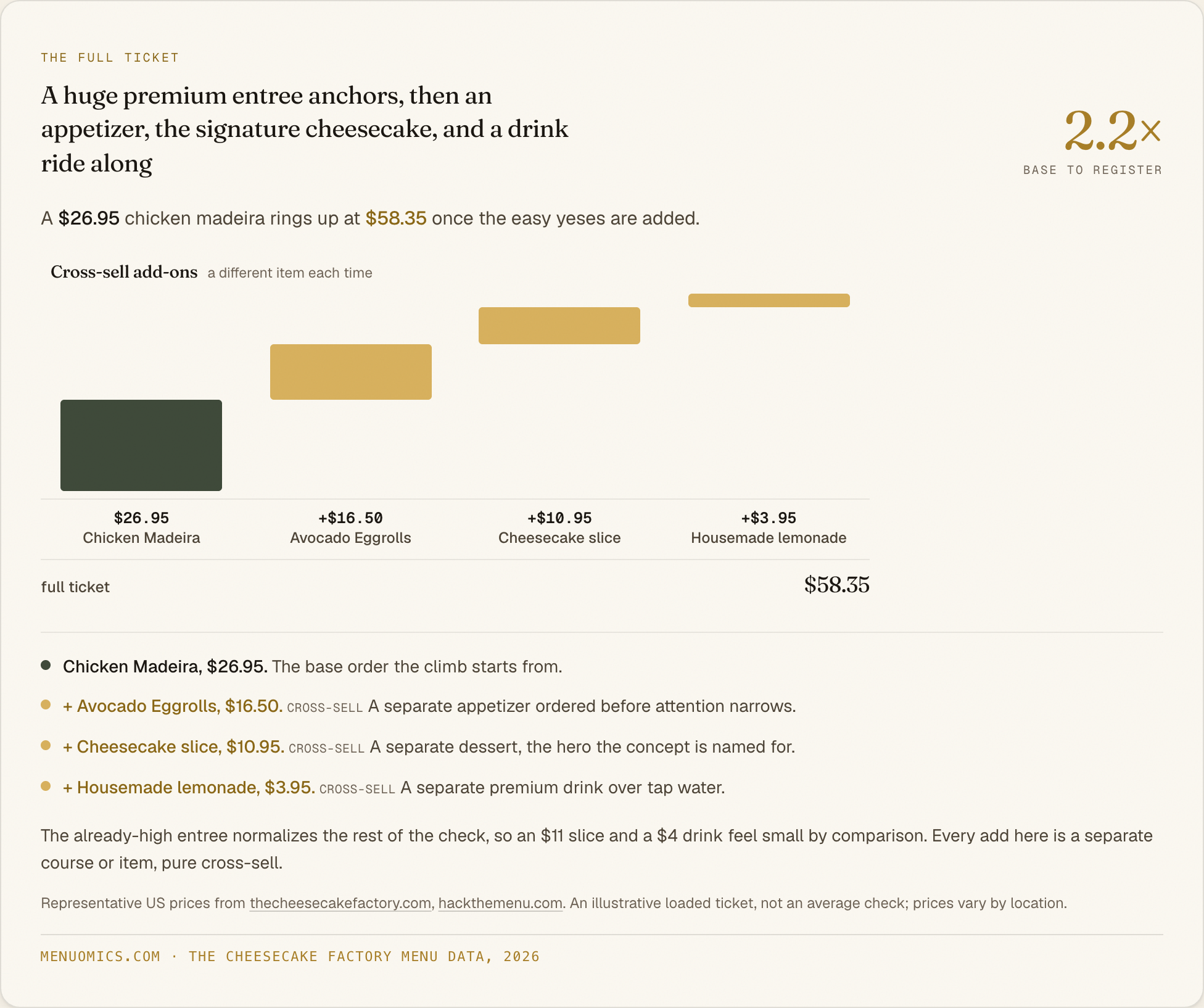
The headline price is only the start. The real number is the journey from a base order to the check at the register, one easy yes at a time.
A huge premium entree anchors, then an appetizer, the signature cheesecake, and a drink ride along
A $26.95 chicken madeira rings up at $58.35 once the easy yeses are added.
- Chicken Madeira, $26.95. The base order the climb starts from.
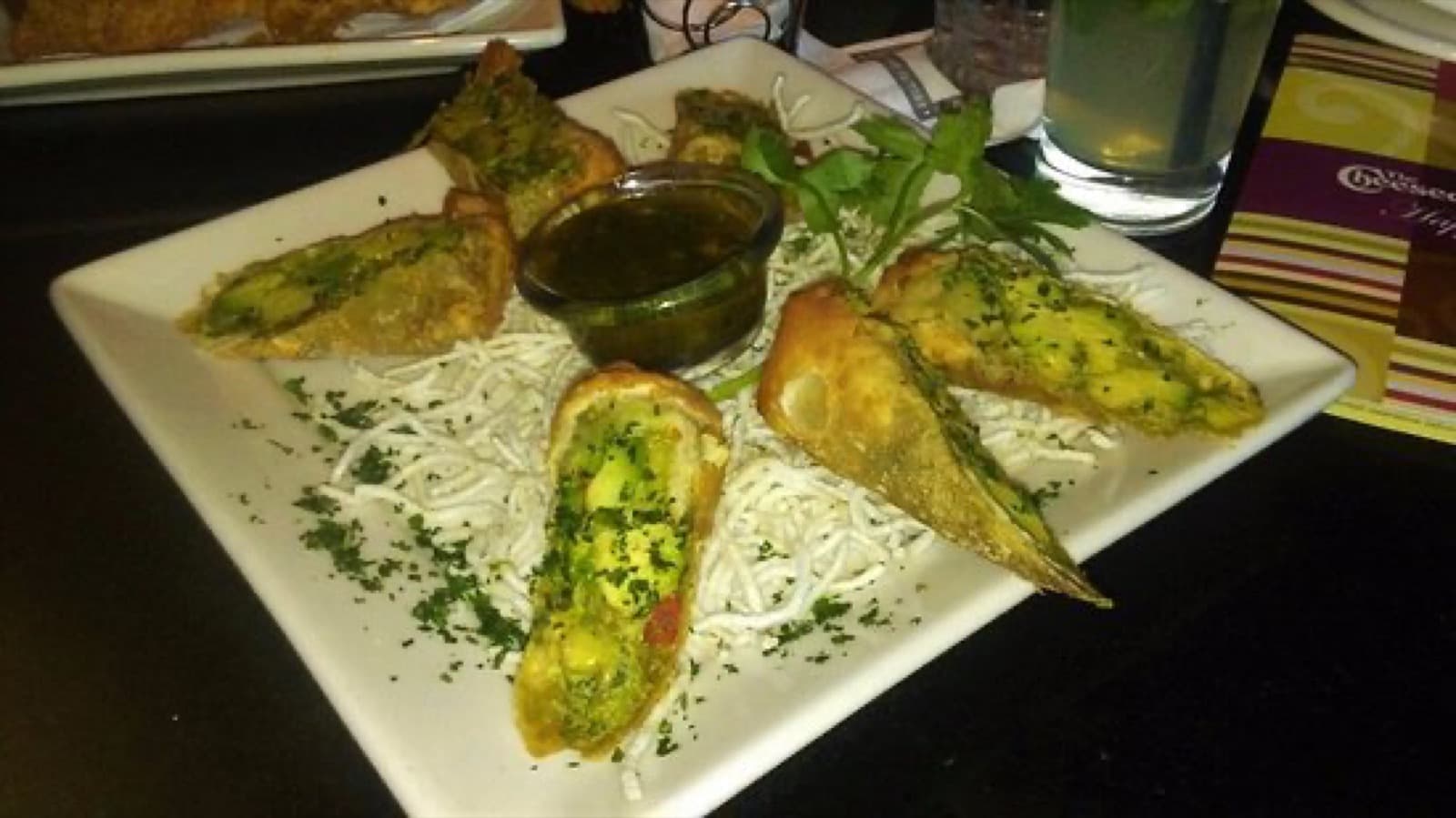
- + Avocado Eggrolls, $16.50. cross-sell A separate appetizer ordered before attention narrows.
- + Cheesecake slice, $10.95. cross-sell A separate dessert, the hero the concept is named for.
- + Housemade lemonade, $3.95. cross-sell A separate premium drink over tap water.
The already-high entree normalizes the rest of the check, so an $11 slice and a $4 drink feel small by comparison. Every add here is a separate course or item, pure cross-sell.
Representative US prices from thecheesecakefactory.com, hackthemenu.com. An illustrative loaded ticket, not an average check; prices vary by location.
Download this chart (PNG) · free to reuse with credit, see reuse terms.
The setup
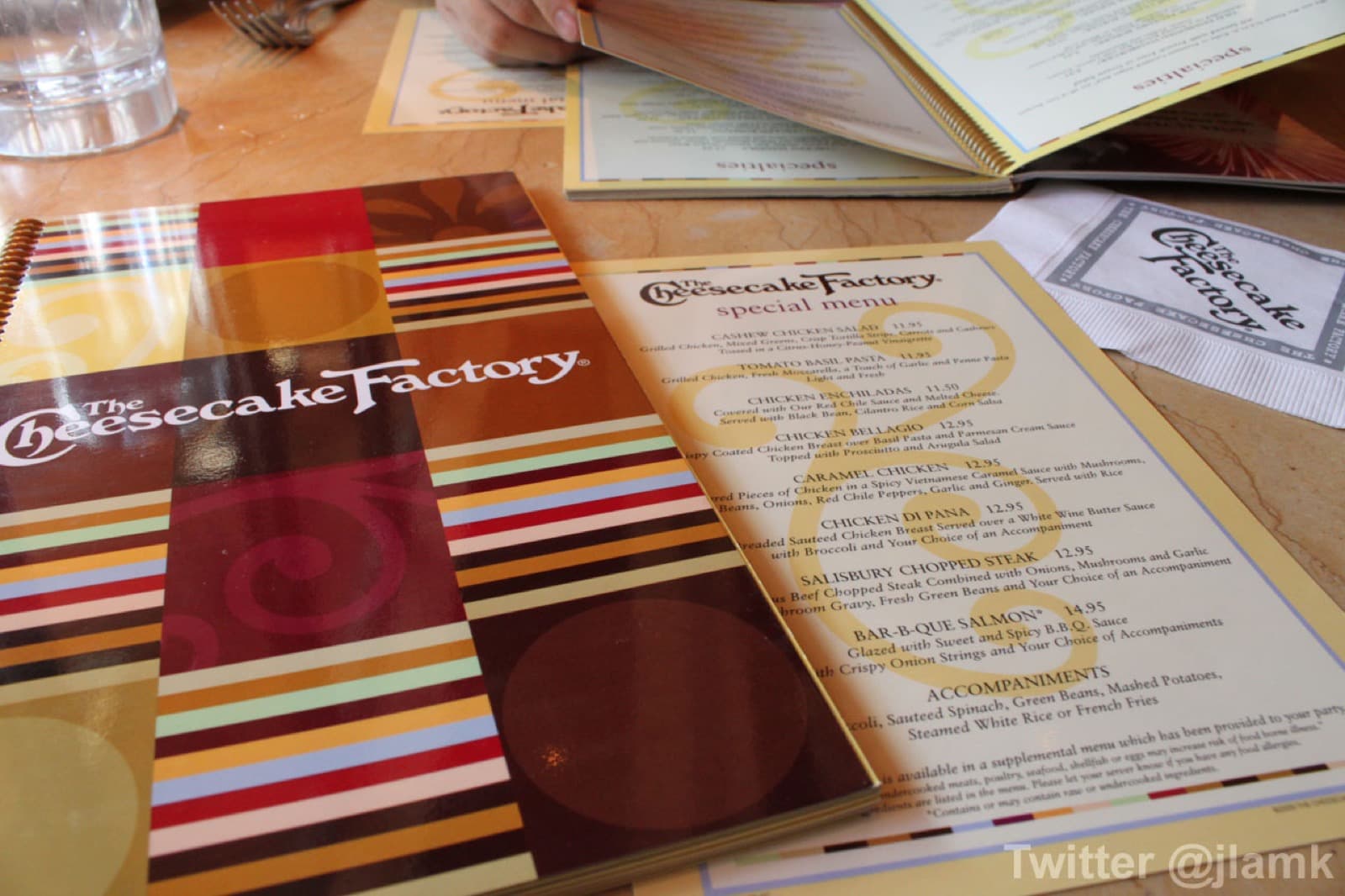
Behavioral economics has a famous warning for restaurants: the paradox of choice. In Iyengar and Lepper's 2000 jam study, shoppers shown 24 jams were one-tenth as likely to buy as shoppers shown six. By that logic, a menu with ~250 items across 35 sections and 21 pages should be a catastrophe. The Cheesecake Factory does roughly $4 billion a year.
So either the science is wrong or the menu is doing something the jam study never measured. It's the second one, and the honest version of the science agrees: a 2010 meta-analysis of fifty choice-overload experiments found the average effect was close to zero. Overload is real in some conditions and absent in others. The Cheesecake Factory engineered the conditions where abundance becomes an asset.
What they get right
The behavioral economics already at work.
The giant menu solves the veto problem
Rory Sutherland's point about group food is that the winner isn't the dish people love most, it's the dish nobody rejects. "Very few people veto pizza." A 250-item menu means that in any party of six, no one is stuck with nothing they want. That's not clutter; it's veto-proofing, and it's why the chain wins birthdays, tourists and mixed groups.
Rory Sutherland on the McDonald's-vs-KFC "rejector" problem
The descriptions do the selling
Items aren't "chicken pasta," they're "Parmesan Crusted Chicken... in a Spicy New Orleans Sauce." Sensory, specific copy raises perceived quality and steers the order.
+27% sales in the classic study, Wansink 2001, note: it lifts which item people pick, not what they'll pay
Popularity is printed on the page
"Our most popular chicken dish!" on the Chicken Madeira is a social-proof nudge aimed squarely at the chain's tourist-heavy, first-time traffic, exactly the audience social proof moves most.
+13-20% on tagged items, Cai, Chen & Fang, AER 2009, strongest on infrequent customers
The sub-menus segment the audience
Around the 250-item core sit targeted specials: 'Lunch Favorites' (smaller and cheaper, until 5pm), the 'SkinnyLicious' 590-calories-or-less menu, and half-sandwich combos. Each carves out a different diner, the lunch crowd, the calorie-counter, the light eater, without touching the main menu's abundance. One menu, several doors in.
The size is the marketing
The menu's sheer heft is a talking point that earns press and pop-culture references for free. Abundance signals confidence and value, costliness, in Sutherland's phrase, carries meaning.
What we’d test
The rewrite, with the expected lift and the honest caveat.
Add a fast lane, don't cut the menu
The menu's one real weakness shows up in the reviews: "overwhelming," slow to decide. The fix isn't subtraction (the size is the brand), it's a curated "New here? Start with these" page of guest favorites, the way Sutherland praised a Lisbon restaurant's set menus that you're still free to deviate from. Keep all 250; give satisficers a door in.
Expect Faster decisions; more orders steered toward high-margin stars
Caveat A layout and curation change to the menu, not a cut; don't shrink it, the abundance is doing real work.
Drop the dollar signs
The dine-in menu prints "$26.95." A Cornell field study found that removing the money cue lifted spend about 8% per person.
Expect ~ +8% per check at this upper-casual price point
Caveat A pricing-presentation change; single-venue study, test it, don't assume the magnitude.
Make "most popular" a system, not a one-off
Exactly one item is tagged. Extend the documented wording lever to a single favorite per section.
Expect Higher attach on the tagged items
Caveat A naming and labeling change; one per section, if everything's a favorite, nothing is.
What diners actually say
Synthesized from public reviews, the reality check that grounds every recommendation.
They praise
- Enormous variety, "something for everyone"
- Generous, shareable portions
- The cheesecakes deliver
- Reliable across locations
They criticize
- The menu is overwhelming to navigate
- Long waits, no reservations
- Quality can be inconsistent dish-to-dish
The verdict
The Cheesecake Factory is proof that "reduce choices" is a rule of thumb, not a law. Its menu is at once a veto-proofing machine, a confidence signal and free press. The opportunity isn't a smaller menu, it's a better on-ramp into the big one, plus a few free formatting wins like dropping the dollar sign.
Common questions
- Is the Cheesecake Factory menu too big?
- No: the ~250-item menu across 21 pages earns a B+ grade because the size is the point, not a flaw. A huge menu means that in any group nobody gets vetoed, so it wins birthdays, tourists and mixed parties where no single dish has to please everyone.
- How much does a meal at the Cheesecake Factory cost?
- A Chicken Madeira entree runs $26.95, but a loaded check (entree plus Avocado Eggrolls, a cheesecake slice and a lemonade) reaches $58.35, about 2.2 times the entree. The high entree normalizes the rest, so an $11 slice and a $4 drink feel small by comparison.
- Why is the Cheesecake Factory menu so long?
- The ~250 items act as veto-proofing: a long menu guarantees something for everyone in a party, which is why mixed groups choose it. The sheer heft also works as free marketing, signaling abundance and confidence and earning press for the chain.
- What is the most expensive item at the Cheesecake Factory?
- The 8oz Filet Mignon at $46.95 sits far above the entree pack and acts as the price anchor. Against it, the $26.95 mains read as the sensible middle, which is the anchor quietly doing its work across a 250-item board.
Sources (7)
- Official menu, thecheesecakefactory.com
- Vox, "The Cheesecake Factory's legendary menu, explained"
- Choice overload (jam study), Iyengar & Lepper, 2000
- Choice-overload meta-analysis (≈0 average effect), Scheibehenne et al., 2010
- Cornell, removing the “$” lifted spend ≈8%/person (Yang, Kimes & Sessarego, 2009)
- Descriptive labels +27% sales, Wansink, Painter & van Ittersum, 2001
- “Most popular” tags +13-20%, Cai, Chen & Fang, AER 2009
Head to head
More breakdowns
 McDonald'sA-
The Extra Value Meal is one of the most-copied ideas in food: fold the whole order into a single number that hurts less than three. Then McValue and the app pile value on top, and the McRib drops in as an event.
Read the McDonald's breakdown → Taco BellA-
A sub-$3 value menu sets the floor, $5/$7/$9 boxes name the deal after its own price, and a never-ending limited-time calendar keeps a reason to come back on the board. Taco Bell sells value loudly, and it works: it gained traffic while rivals shrank.
Read the Taco Bell breakdown → Dunkin'A-
A premium latte anchors the cheap iced coffee as the obvious default, the $6 Meal Deal bundles the breakfast, and Dunkin' Rewards turns the morning run into a streak. The menu craft is textbook; the strain is price creep and an app that increasingly decides the real price.
Read the Dunkin' breakdown → Panda ExpressB+
The whole order comes down to one question, how many entrees. A Bowl is one, a Plate is two, a Bigger Plate is three, and the menu is built so the middle Plate wins. Orange Chicken is the anchor everyone orders, and a quiet $1.50 premium upcharge lifts the check while the headline price stays put.
Read the Panda Express breakdown → Raising Cane'sA-
The chicken-finger chain that built a billion-dollar machine by refusing to sell almost anything else.
Read the Raising Cane's breakdown → PopeyesB-
The chain that proved a sold-out sign sells harder than any coupon. We grade the menu craft behind the chicken-sandwich phenomenon, not the hype.
Read the Popeyes breakdown →Your menu next
Get this for your own menu, free.
Send your menu and we’ll send back the same breakdown, what you get right, what we’d test, and why.
In-N-Out Burger
Three burgers, no seasonal items, and a famous off-menu modifier ('Animal Style') that turns customers into evangelists. Restraint as strategy.
Read it →