In-N-Out Burger menu, graded
The power of the three-burger menu
If the Cheesecake Factory proves abundance can work, In-N-Out proves the exact opposite can too, which is the most Sutherland thing about it.
Menu-craft grade
A near-perfect exercise in constraint: a three-burger menu that signals confidence and a modifier culture ('Animal Style') that manufactures belonging. It mainly leaves easy social-proof cues unused for first-timers.
Graded on how well the menu uses behavioral economics, not the food.
Menu and prices verified September 2026
A 3-minute audio read of the analysis
- Type
- Chain
- Where
- Irvine, CA
- Cuisine
- Fast food, burgers
- Footprint
- 400+ locations
- Since
- 1948
- Ownership
- Privately held, sole owner Lynsi Snyder
The mechanics, drawn
The same menu, mapped onto an axis, so the behavioral move is something you can see, not just read.
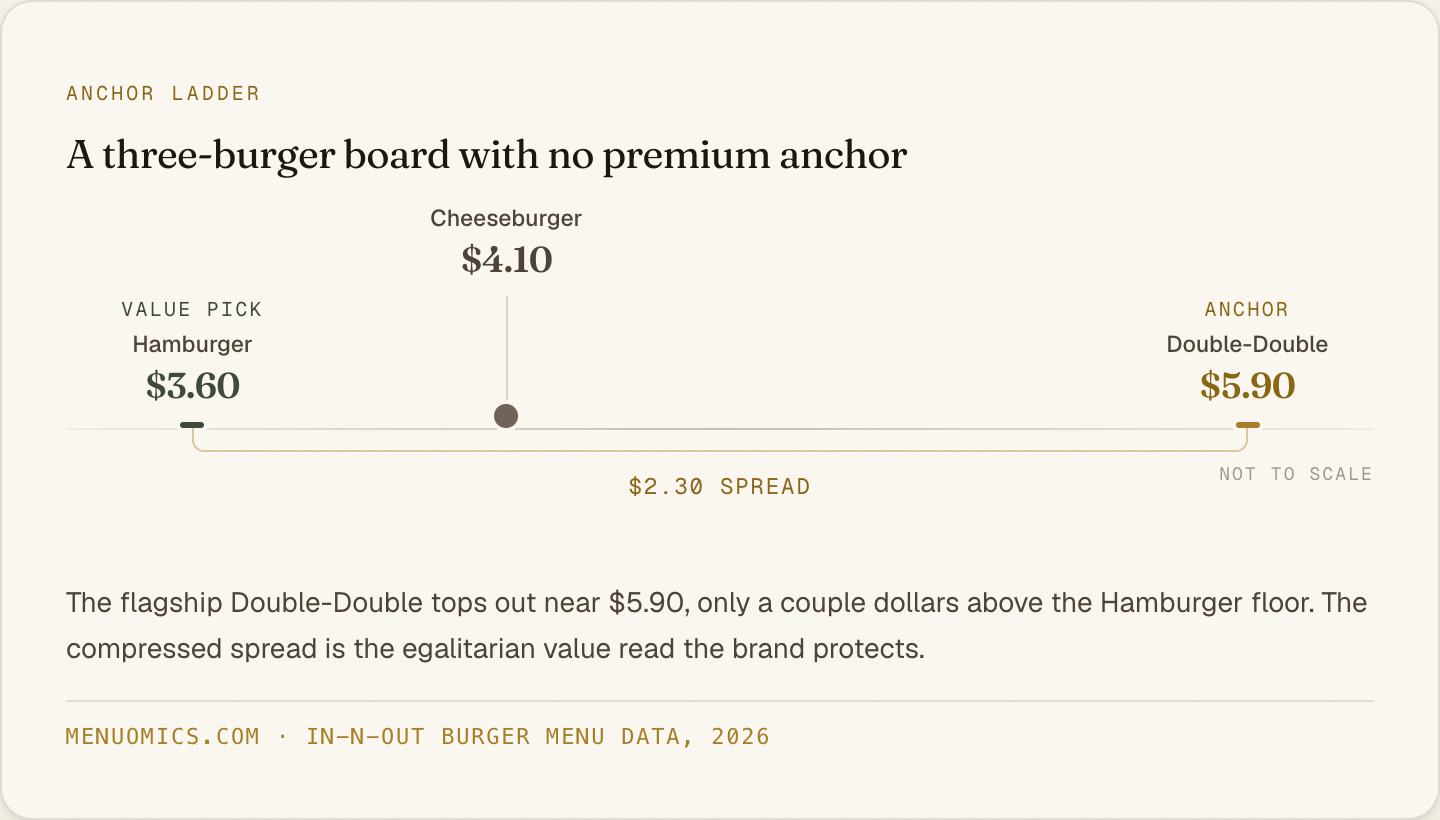
A three-burger board with no premium anchor
The flagship Double-Double tops out near $5.90, only a couple dollars above the Hamburger floor. The compressed spread is the egalitarian value read the brand protects.
Download this chart (PNG) · free to reuse with credit, see reuse terms.
The full ticket
What it actually rings up to.
The headline price is only the start. The real number is the journey from a base order to the check at the register, one easy yes at a time.
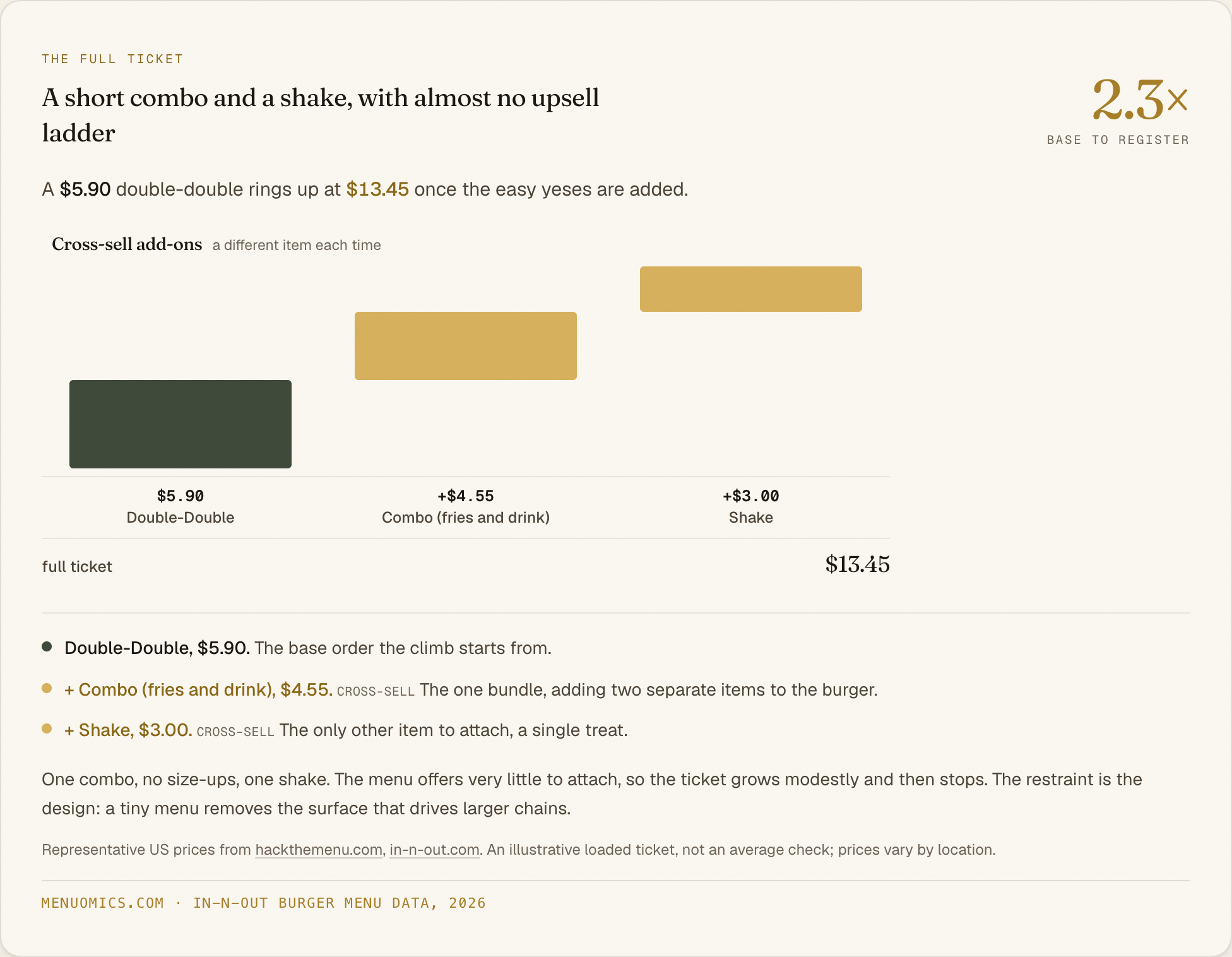
A short combo and a shake, with almost no upsell ladder
A $5.90 double-double rings up at $13.45 once the easy yeses are added.
- Double-Double, $5.90. The base order the climb starts from.
- + Combo (fries and drink), $4.55. cross-sell The one bundle, adding two separate items to the burger.
- + Shake, $3.00. cross-sell The only other item to attach, a single treat.
One combo, no size-ups, one shake. The menu offers very little to attach, so the ticket grows modestly and then stops. The restraint is the design: a tiny menu removes the surface that drives larger chains.
Representative US prices from hackthemenu.com, in-n-out.com. An illustrative loaded ticket, not an average check; prices vary by location.
Download this chart (PNG) · free to reuse with credit, see reuse terms.
The setup
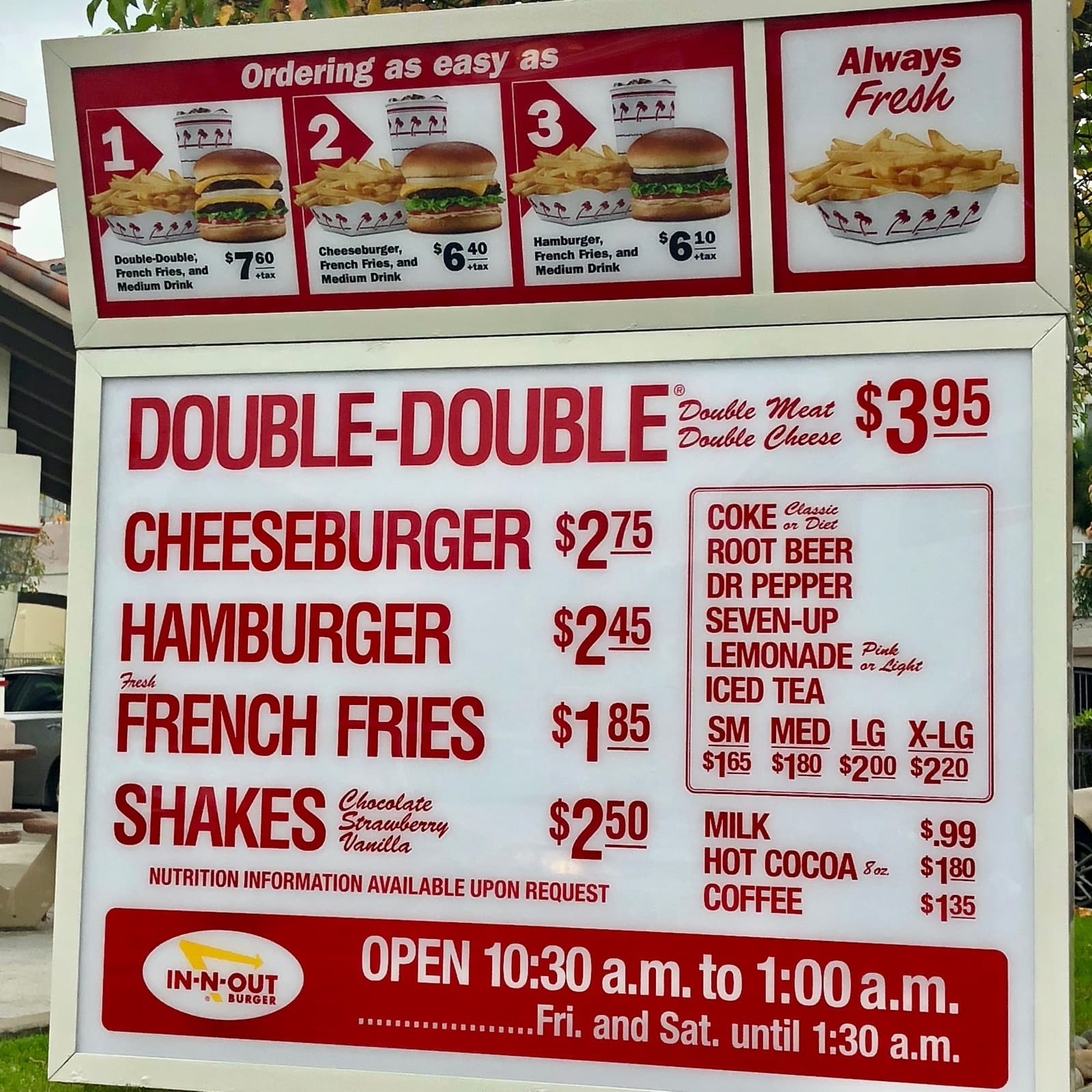
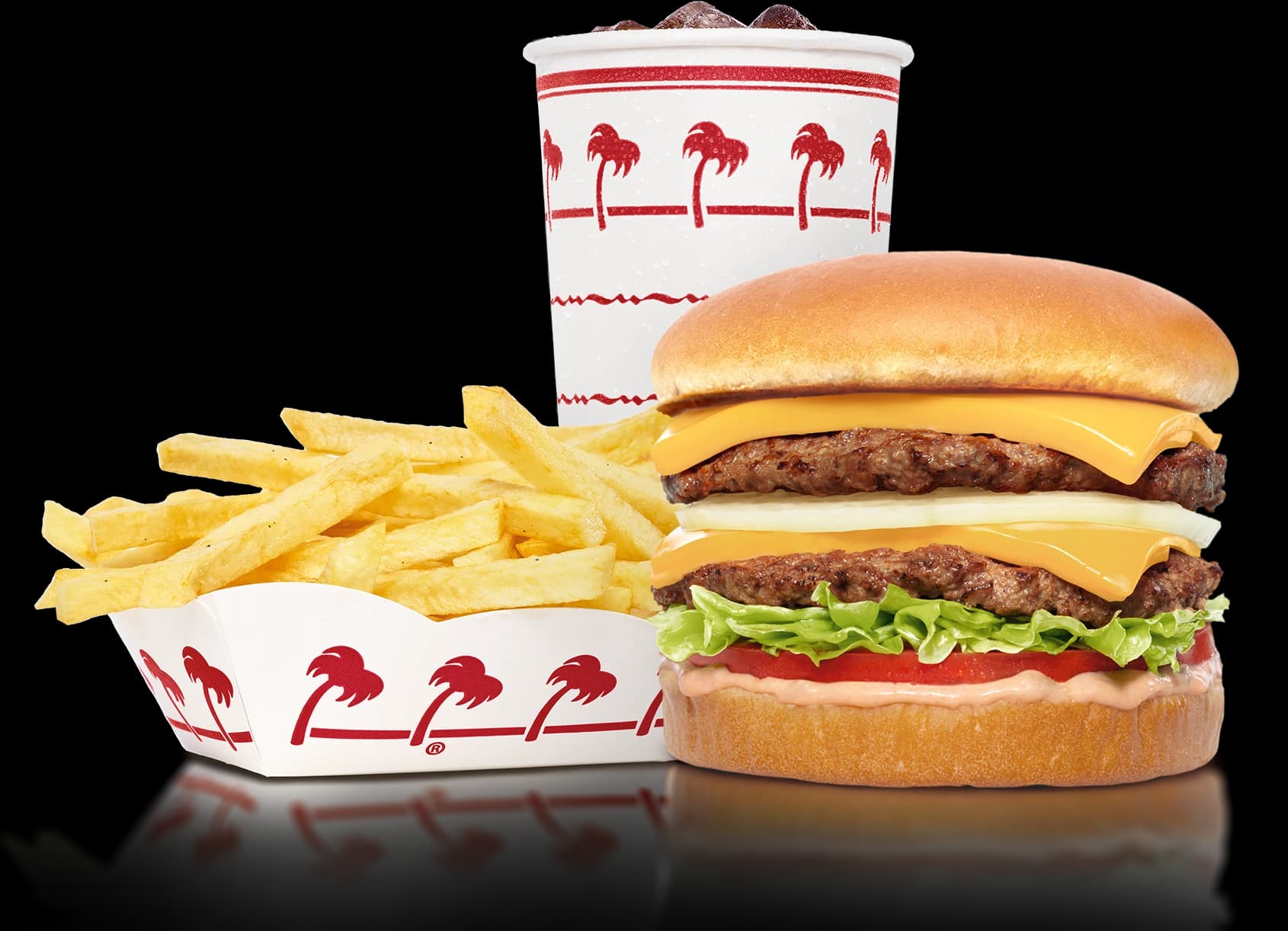
In-N-Out's entire printed menu is three burgers plus fries, shakes and drinks, and it has not meaningfully changed since the chain was founded in Baldwin Park in 1948. The last addition, hot cocoa, made headlines as 'the first new item in fifteen years.' By every modern playbook that should be a liability, yet In-N-Out posts some of the highest customer loyalty in fast food.
This is the photographic negative of the Cheesecake Factory, and both are right: Sutherland's 'the opposite of a good idea can also be a good idea,' made out of beef. Constraint is doing for In-N-Out what abundance does for Cheesecake: removing friction, signaling confidence, and handing customers a story to tell.
What they get right
The behavioral economics already at work.
Constraint removes the friction
Three burgers means no decision fatigue, faster lines, and an unmistakable signal: 'we do one thing, perfectly.' Focus is itself a quality claim.
the inverse of Iyengar & Lepper's choice-overload finding
The 'Animal Style' modifier is the masterstroke
'Animal Style' is not a separate menu item; it is a way to order any burger, and that is the point. It hands customers an insider password, a badge of belonging they teach their friends. In-N-Out then published it as the 'Not So Secret Menu,' which is reassurance: you are not left out, you are in on it. Scarcity creates the desire; inclusion converts it to loyalty.
Worchel et al. 1975 (scarcity) + word-of-mouth / observational learning
Confident, provenance-rich copy
'Unchanged since 1948,' '100% American beef, no additives': short lines that kill uncertainty and signal quality. The brand even markets 'no freezers, no microwaves, no heat lamps,' a costly signal you can taste.
Rory Sutherland on reassurance and costly signalling
Reassuringly cheap
Low prices plus visible quality flip Sutherland's 'reassuringly expensive' on its head: the value perception is so strong that reviewers cite it unprompted, in this economy especially.
What we’d test
The rewrite, with the expected lift and the honest caveat.
Resist the premium anchor item
The textbook layout move would be to add a high-priced 'signature' burger at the top of the board to lift the average check by anchoring. For In-N-Out, do not. The board's egalitarian 'every burger here is great' read is the brand; a $14 anchor line would tax the very trust that drives the loyalty. The behaviorally sophisticated structural choice here is restraint.
Expect Preserves the value read that reviewers already cite unprompted
Caveat Menu-structure note only: this is the rare board where the right change is no new line.
Add a first-timer board cue
In-N-Out is expanding into states full of people who have never ordered. A single board line, 'First time? Try a Double-Double, Animal Style,' applies social proof exactly where uncertainty is highest, and it teaches the modifier wording at the same time.
Expect Smoother first orders in new markets
Caveat Wording and layout only: keep it to one line so the spare board stays spare.
Make the modifier wording explicit on the board
Because 'Animal Style' is an off-menu preparation rather than a listed item, a tiny board label such as 'Ask for any burger Animal Style' turns insider knowledge into a low-friction, named option without adding a SKU. It is a naming and labeling change, not a new product.
Expect More customers feel 'in on it' without staff having to explain it
Caveat Wording only: it must read as an option on existing burgers, never as a fourth burger line.
What diners actually say
Synthesized from public reviews, the reality check that grounds every recommendation.
They praise
- Fresh, never-frozen taste
- Genuine value for the price
- Consistent, accurate orders
- Cult-level loyalty
They criticize
- Long lines and waits
- The fries divide people
- Limited geography, by design
The verdict
In-N-Out is the proof that the opposite of a good idea can also be a good idea. Where the Cheesecake Factory veto-proofs with breadth, In-N-Out builds devotion with constraint and an insider modifier anyone can use. Our strongest menu-design recommendation is the one most consultants will not give: leave the three-burger board alone, and let the naming of the off-menu modifiers do the work.
Common questions
- Why does In-N-Out only have three burgers?
- In-N-Out prints just three burgers (Hamburger ~$3.60, Cheeseburger ~$4.10, Double-Double ~$5.90), a constraint that earns an A grade. Three options remove decision fatigue, speed the line and signal 'we do one thing perfectly,' which is itself a quality claim.
- What is the In-N-Out secret menu?
- The most famous off-menu order is 'Animal Style,' a preparation (mustard-grilled patty, extra spread, pickles, grilled onions) you can ask for on any burger, not a separate item. In-N-Out published it as the 'Not So Secret Menu,' which hands customers an insider password they teach their friends.
- How much does a Double-Double meal cost?
- A Double-Double is about $5.90, and a full combo with fries, a drink and a shake totals roughly $13.45, about 2.3 times the burger. The tiny menu offers little to attach, so the ticket grows modestly and then stops by design.
- Why is In-N-Out so cheap?
- Burgers run from about $3.60 to $5.90, and the compressed spread is deliberate: there is no premium 'signature' burger anchoring the board higher. That egalitarian 'every burger here is great' read is the brand, and the visible value is why reviewers cite the price unprompted.
- What is the most expensive item at In-N-Out Burger?
- On the standard menu, the priciest single item is the Double-Double, about $5.90 in representative 2026 US pricing (it varies by location; group packs and combo deals can cost more). That top price also does quiet work as the menu's anchor: it is the number that makes everything below it read as reasonable.
Head to head
More breakdowns
 McDonald'sA-
The Extra Value Meal is one of the most-copied ideas in food: fold the whole order into a single number that hurts less than three. Then McValue and the app pile value on top, and the McRib drops in as an event.
Read the McDonald's breakdown → Chick-fil-AA
A famously simple chicken sandwich, an easy 'make it a meal' bundle, and free dipping sauces, wrapped in the most-praised service in fast food. The menu stays out of the way so the hospitality can do the selling.
Read the Chick-fil-A breakdown → Chili's Grill & BarA-
A $10.99 bundle dragged Chili's out of a slump and back to the top of casual-dining traffic. Read closely, '3 For Me' is one round number doing the work of three separate decisions.
Read the Chili's Grill & Bar breakdown → Domino'sB+
The $6.99 Mix & Match looks like a low price. Its real design is the words 'two or more': a self-bundle that turns one cheap pizza into a full cart.
Read the Domino's breakdown → Jersey Mike'sB+
Numbered subs in three sizes, a free signature modifier called 'Mike's Way,' and a Giant pitched as the smart-value pick. The size ladder, not the combo, is where the menu does its work.
Read the Jersey Mike's breakdown → Logan's RoadhouseB
A steakhouse that reviewers rank dead last still runs a value menu most casual chains would be proud of. The food is panned; the menu design is not. That gap is the whole point.
Read the Logan's Roadhouse breakdown →Your menu next
Get this for your own menu, free.
Send your menu and we’ll send back the same breakdown, what you get right, what we’d test, and why.
Olive Garden
Never-ending breadsticks read less like generosity than like decoupled pricing: a loss-leader and a recurring scarcity event working in concert.
Read it →